Before, After, and a Return
A brief history of the forests of the Quinault Nation
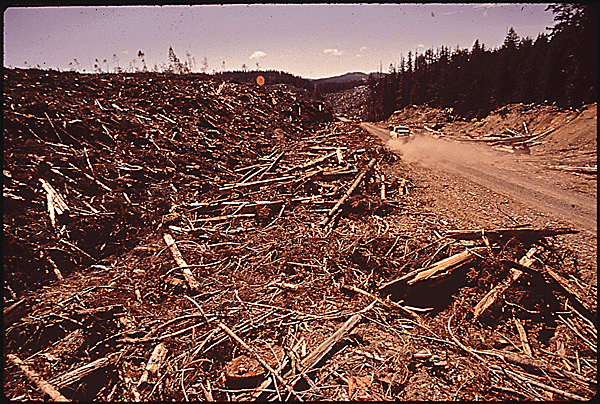
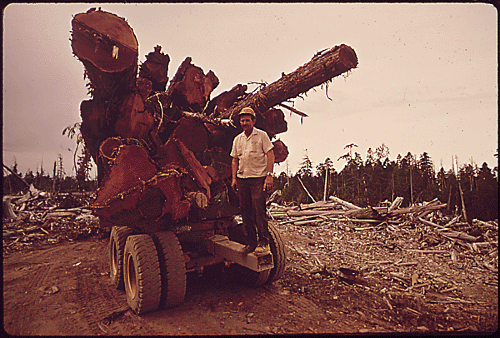
The photo’s title says it all: “Clear-cutting of cedar trees in the [Taholah] unit of the Quinault Indian Reservation. The Indians maintain that this type of cutting is unnecessary and wasteful, but the Bureau of Indian Affairs insists it is the only way to manage this type of forest.”
The image, taken in August 1972 as part of the Environmental Protection Agency’s DOCUMERICA project, made visible the ugliness of clearcuts on the Quinault Indian Reservation on Washington’s Olympic Peninsula.
Although the scene depicts a fresh clearcut, the logging happening among the forests of the Quinault Indian Nation was constructed in the 19th century out of false assumptions. Just as the shutter flickered on the camera, though, changes at Quinault were starting to tear out these poisoned ideas at their roots. What emerged afterward not only improved forestry and other resource management but also advanced self-determination and Native sovereignty. Ecological and cultural resilience are part of the same process—and the Quinault story evokes many others.
The All-Too-Familiar Background
In the Northwest, the treaties of 1854-56 included the Quinault Treaty (also known as the Treaty of Olympia) as one of the final ones. It stripped land title from several Native American tribes in exchange for reservation land; maintaining the right to fish, hunt, gather, and graze on “all open and unclaimed lands;” and promises of some financial, educational, and vocational assistance. It followed a general formula and extended the authority of the American state.
When Congress ratified it in 1859, it created a small reservation of about 10,000 acres. President Ulysses Grant enlarged to about 200,000 acres in 1873.
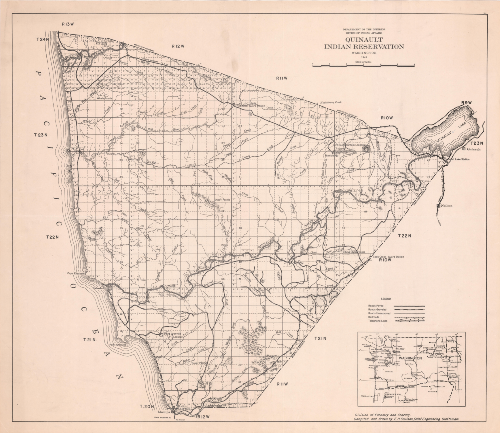
The reservation included about 25 miles of Pacific coast, and the Quinault River coursed through the heart of the land. This water focus allowed a salmon culture and subsistence to continue. However, the reservation also included abundant forests with the western redcedar a dominant species—known here as elsewhere as a “tree of life.” It was valuable, like salmon, for both cultural and economic reasons.
Between 1887 and 1934, Federal Indian policy was shaped by the General Allotment Act, better known as the Dawes Act. There were two main purposes for this law. First, it was designed to assimilate Indigenous people by breaking up tribal land ownership and using a private property model instead. Promoting farming, primarily, and incorporating market capitalism would bring tribes into mainstream American life—so went the theory.
Second, the law aimed to remove land from Native control. After allotting land to individual tribal members, the remaining land on reservations were sold. So, after a treaty-making process, which reduced a continent of Native land to only reservations, the Dawes Act took even that much-reduced land base and cut it much further. Some 100 million acres were lost during allotment; tribes retained only one-third what they controlled when the Dawes Act went into effect. This was land theft after dispossession—and undermined the promises made in the treaties.
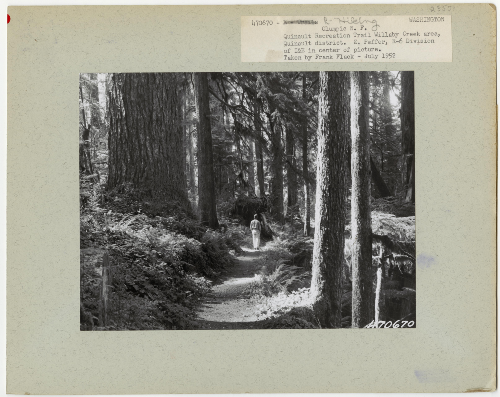
Allotment Comes for the Quinault
Except for in rare pockets, the Olympic Peninsula is not farming country. And the Native peoples of the region were not farmers. The allotment dreams of reformers fell apart, but the Bureau of Indian Affairs did not abandon them. Allotment came to the Quinault Reservation slowly—not until the 1920s. Policymakers also halved the normal allotment to 80 acres, recognizing that farms weren’t going to replace the forest. By the time allotment ended in 1934, there were 2,340 individual allotments of forest land.
By mid-century, the situation on the reservation worsened. Educational and economic opportunities were limited. For the 1,500 adults on the reservation, there were roughly 200 jobs. Alcoholism and suicide rates increased. About half the tribe lived elsewhere.
Subsistence life—fed by the sea, river, and forest—remained possible but was declining. The reason for that decline lay in allotment. Rather than sparking assimilation and economic success, the Dawes Act wrought its devastation.
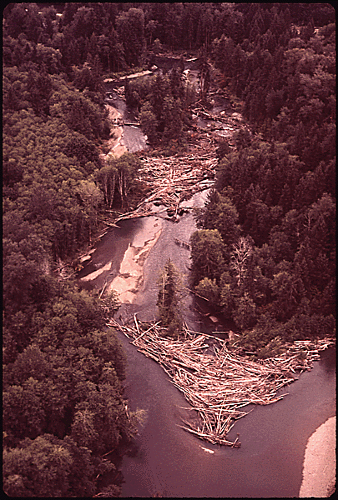
Forest Life Devastated
Managing any forest sustainably is a complicated enterprise. To be successful, companies or governments or nations needed to work with large blocks of land (a major motivation for combining public-private lands east of the Quinault Reservation, described here). By carving the rich forest into more than two thousand small blocks, incentives changed. A one-time payment for cutting rights or outright ownership made an economically attractive choice.
The Northwest timber economy ramped up in these years. Private forestlands had largely been cut. Old-growth forests, where huge trees dominated and promised profit, remained mostly on public lands. But they existed at Quinault, and so timber companies eyed the forest.
The Bureau of Indian Affairs took charge of timber sales across two 30,000-acre tracts in 1952 where applicable environmental standards were lower compared with state lands or national forests. Timber companies stripped the land at a rate of 200 million board feet a year using all manner of poor forestry practices.
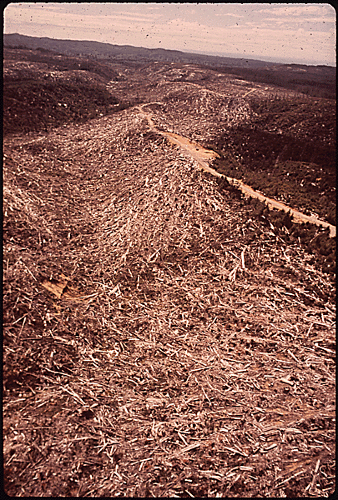
They clearcut in huge blocks. They left logging debris on the ground increasing the chance for fires and making it difficult for anything to regrow, or if left in streams, it blocked fish. They bulldozed gravel from streambeds, trashing salmon habitat. They built poor roads that eroded badly. And the BIA did not secure good financial returns.
The forest and the people who relied on it suffered.
Fighting Back
After some time in college, the military, and working in Portland for the federal government, Joe DeLaCruz returned to the reservation in the late 1960s. A natural leader, DeLaCruz became the tribal business manager.
The tribe had grown increasingly frustrated by the poor timber program, citing the poor practices and the bad prices allotment owners received. The tribe tried negotiating with the two companies, ITT-Rayonier and Aloha Lumber, without resolution.
So, on September 13, 1971, DeLaCruz, with support from the tribal council, barricaded Chow Chow Bridge over the Quinault River, blocking logging trucks. A photo that appeared in the Seattle Post-Intelligencer showed an old pickup parked at an angle, no room to pass. DeLaCruz squatted below a sign referencing the “Battle of Chow Chow Bridge” and urging the timber companies to talk. The event changed the negotiation dynamics, and the Quinault received concessions. (The following year, DeLaCruz became president of the Quinault Indian Nation.)
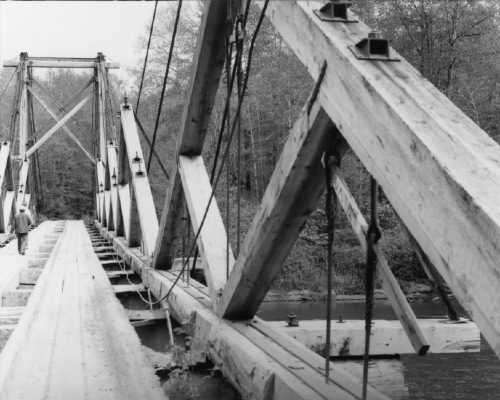
The blockade addressed an immediate concern, but DeLaCruz and others at Quinault Nation looked long-term. A delegation that included DeLaCruz went to the University of Washington searching for experts in natural resources to help develop a program the tribe could manage. DeLaCruz asked Gary Morishima, a Ph.D. student to start a forestry program “for the generations of Quinault that have yet to be born.”
Morishima, who had been born at Tule Lake incarceration center during World War II, headed to the reservation in 1978 and stayed. During his first visit, Morishima drove to see what logging companies left behind. “I saw the before and I saw the after. The huge piles of logging slash left on the ground, streams and rivers that supported the salmon, that had sustained the tribal culture and economy for so many centuries, were blocked with impassable jams and silted with choking sediment. . . . It was quite a shocking experience,” Morishima recalled. “I didn’t know a heck of a lot about forestry at that time, but I knew it wasn’t right.”
Legal Shifts
Part of what created fertile ground for the work Morishima pursued came from a series of legal decisions that were emerging when Morishima arrived. In less than a decade, three significant legal changes helped transform how the Quinault managed natural resources.
In 1974, the so-called Boldt Decision found that treaty tribes were entitled to half the salmon catch. This strengthened tribes’ economic base and reinforced their sovereignty. Later, courts affirmed that habitat management—which often meant forest management—had to be consistent with a healthy salmon population. This gave tribes a formal stake alongside other environmental decision-makers working on forest management.
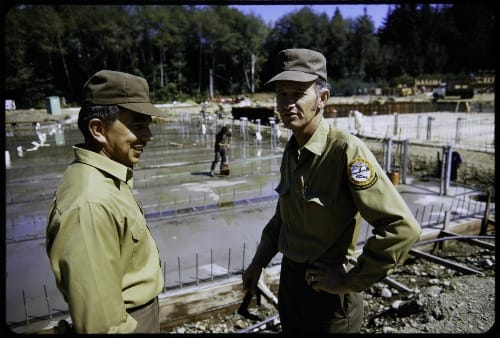
The following year, Congress passed the Indian Self-Determination and Education Assistance Act, which wrested some power from the BIA by allowing tribes to enter their own contracts for services. This allowed the Quinault to manage their own forestry programs under terms more aligned with their values—over BIA resistance.
Finally, in 1983, the Supreme Court ruled in United States v. Mitchell that the federal government was legally accountable for damages caused by its mismanagement of Quinault forests.
Each of these bolstered sovereignty and began the process of healing from the wounds of ignoring treaties, imposing allotments, and destroying forests.
Rebuilding
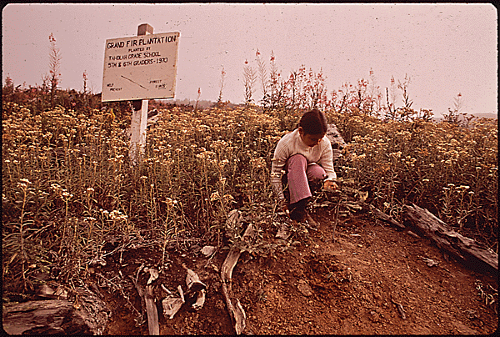
In the decades since the incident at Chow Chow Bridge, the Quinault have focused on consolidating land—undoing the damage of allotment. And their management focuses not on short-term timber profits but long-term ecosystem health, including improving habitat for elk and salmon and protecting remaining old-growth forests. These exercises of sovereignty and stewardship continue practices that began in time immemorial, interrupted by a violent interregnum.
Comments ()