Down Historical Lane
A run through history
On Sunday morning, while most people were still drinking their first cups of coffee or working through their waffles, I lined up with several hundred people for the start of the annual Mill Town Half-Marathon in Everett. I’ve run more than a dozen of these 13.1-mile races, so I no longer worry about my ability to finish. Such an effort requires mental concentration along with physical preparation, though, so I tried dialing in my focus in the milling, chattering crowd before the start. One way to do that was to observe my surroundings.
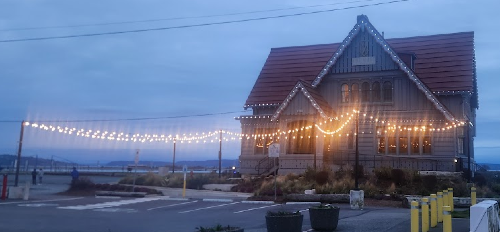
Behind the start line stood an ornate, beautiful old building that now serves as a coffee and whiskey bar. Its red roof tops the building, the rest of which had a grayness that matched the morning’s western slate sky. Strung lights brightened the morning while I warmed up nearby. As start time neared, the sky in the west and north lit up and promised good conditions for the race, especially for a Pacific Northwest March which can be blustery and wet.
Long before the building offered drinks for Pacific Northwesterners strolling along the waterfront, it served as an office building for the Weyerhaeuser Timber Company at two of its mill sites in Everett. The last Weyerhaeuser mill in town had closed in 1992 (and the final paper mill in town closed 20 years later), so there’s a good chance most of the runners held little understanding of the nature of the race’s name, Mill Town.
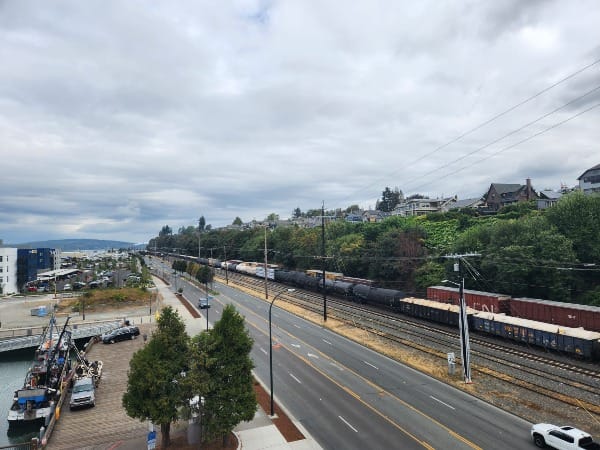
We started in a shuffle that accompanies all race beginnings until the bodies can spread and find the right pace. The first quarter-mile or so meandered through the marina and new developments, including hotels, apartments, and restaurants. Then, we moved along Marine View Drive between the railroad and the Snohomish River which fed into Possession Sound.
Originally, the rail line was the Great Northern Railway’s. The company had chosen Everett as its transcontinental terminus (sort of—the line arrived in Everett first but immediately tied into Seattle, making it the true terminus). The company’s president, James J. Hill, built this line without the substantial benefits of federal land grants that the other transcontinental lines received. Doing so, Hill had to be careful and economical as he built. It made the construction slower but the business stronger, allowing it to be the only transcontinental that didn’t go into receivership in the Panic of 1893.
Hill’s neighbor in St. Paul was Frederick Weyerhaeuser. In 1900, Hill sold Weyerhaeuser 900,000 acres of forest in Washington. In 1903, the Weyerhaeuser Timber Company opened its first Everett mill, the largest in the world at the time. That mill was located just south of the race course, but the imprint of the waterfront’s erstwhile timber economy was visible to our left as we moved beside the railroad.
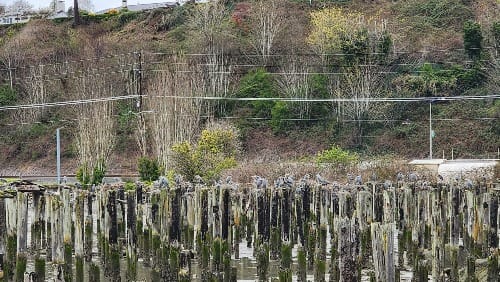
Next to the shore, pilings remain. Once they held log booms in place, but now the pilings hold great blue herons. For decades, all along the Everett waterfront, mills worked converting fir and cedar forests into shingles, lumber, and pulp and paper. The town was known as the City of Smokestacks. As I ran along, I noticed the lack of smokestacks and the pilings as signs of great change. Everyone else looked ahead at the big hill that took us from sea level up to the residential area that overlooked the river, sound, and, in the distance, the Olympic Mountains.
If a single descriptor of the historic Everett waterfront had to be assigned, it would be “gritty.” But along the bluff, a different word applied: “grand,” which was the name of the street the runners and I made our way along. Grand Avenue overlooks the waterfront, and the homes along it are what you’d expect on such a street with such a view. They wear their time well, calling to mind how the well-to-do lived a century ago in a booming manufacturing town.
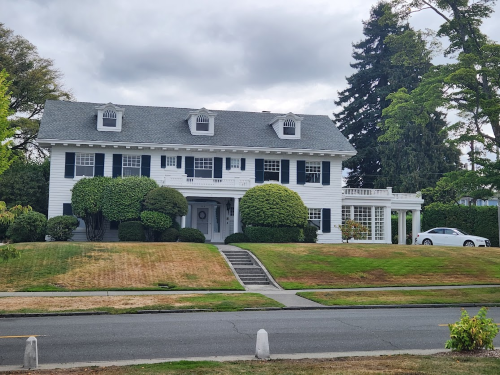
One home, though, always stands out, and I noted it as I settled into a comfortable pace. Across from a thin city park, the home of Henry “Scoop” Jackson looks down on the marina and Naval Station Everett, which Jackson, as a senator, helped get started. The home stands out as just a bit grander than the rest.
Jackson stood out too. His career began in the Depression and lasted until the Reagan administration. A foreign policy hawk and shrewd environmental legislator, Jackson accomplished a lot, including being instrumental in the creation of the North Cascades National Park Service Complex and the passage of the National Environmental Policy Act. While Jackson served, he was part of an especially influential group of postwar Northwest political figures who ensured the region received its share of federal support. He was widely known as the Senator from Boeing.
After the race course passed Jackson’s home, it meandered through more residential areas—and I struggled to keep pace. Then, a slight downhill helped me coast out of the residential area back to the last part of the course.
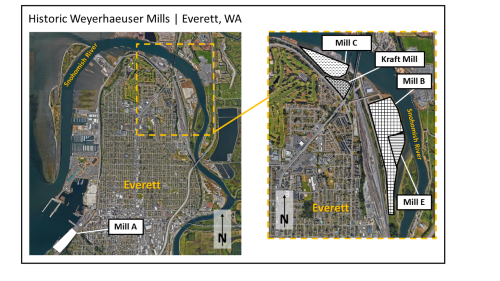
It isn’t easy to notice, but Everett sits on a peninsula, the Snohomish River wrapping around the city. At the northern edge, Weyerhaeuser opened its Mill C in 1923 and an adjacent Kraft Pulp Mill in 1953—they operated until 1977 and 1992 respectively. I ran past these sites, which were operating when I was young, and then crossed the river on a bridge I’ve crossed thousands of times. I glanced down, briefly noted that barges still get loaded along the river, just not with lumber like they used to.
But at this point, about 10 miles into the race, noticing anything other than my belabored breathing challenged my concentration. The course turned around and we retraced our steps to the finish.
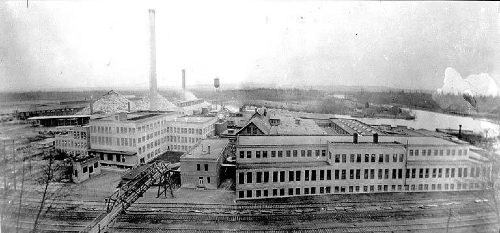
Everett’s transformation from City of Smokestacks might seem complete. The people walking their dogs along the boardwalk do not choke on the air pollution that once covered the city and their views were clear. Yet the soil and sediment beneath the water continue to require cleanup.
The residues of history run deep—and remain close enough to the surface you can see them while running on a Sunday morning.
Comments ()