Speaking a Word for Beauty
The virtue of financial illiteracy
I have been interviewed a number of times for podcasts about my work or by journalists for my expertise on public lands. Inevitably, afterward, I wish I had been more articulate or that I had remembered a better example. But rarely have I been embarrassed by my naivety.
However, sometime during the transition to President Donald Trump’s second term, I spoke to a journalist—I’ve forgotten who—about things to expect for public lands in the new administration. My imagination was not up to the task.
The depths of hostility to public lands and the lack of moral restraint have been far worse than I expected. In particular, I remember not being worried so much about the nominee for Secretary of the Interior, Doug Burgum. It could have been worse, I thought, thinking of someone like Senator Mike Lee who can’t stop trying to give away the public’s land. I was unaware of Burgum’s own legacy of anti-public lands sentiment.
But Burgum, it turns out, has been distinctly awful—a small-minded man who does not value public lands beyond their ability to generate money. This should have been obvious to me; he is a billionaire.
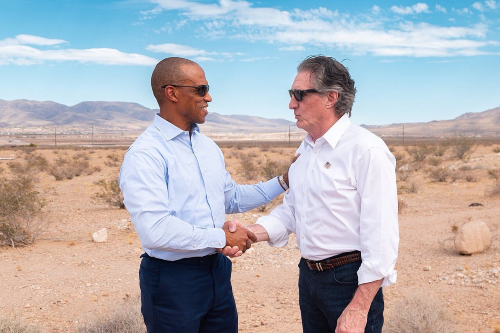
During the hearings for his nomination, Burgum made clear that he believes our national forests, parks, ranges, and refuges exist as part of the nation’s balance sheet. That is, to determine Yosemite’s value, you calculate the timber you can extract or the water power you can squeeze from it. The lands we own are assets to be managed and maximized, not irreplaceable national treasures to protect or intact ecosystems that sustain life. (And the substantial economic activity from outdoor recreation—almost $700 billion last year—is rarely considered; only dollars extracted from the earth count.)
Last week, Secretary Burgum spoke at a conference sponsored by BlackRock, the globe’s largest asset manager, where he elaborated. (The best coverage is here.) He complained about 6.5 million acres of offshore areas—“prime development area” to Burgum’s mind—taken out of oil and gas exploration by President Joe Biden. Doing so, according to Burgum’s accounting, “wiped a trillion dollars off the balance sheet.”
Public lands advocates, Burgum argued, are financially illiterate. He was grateful to the BlackRock audience for their financial literacy. “Wouldn’t it be great if we could have the world be a little more financially literate?,” Burgum asked them.
This week Burgum announced he will convene the so-called God Squad, which allows the Endangered Species Act to be ignored. About 50 Rice’s whales, a distinct species in the Gulf of Mexico, remain in existence, a population that declined 22% because of the Deepwater Horizon spill. Burgum is signaling that oil exploration is more valuable than the continued existence of an entire species.
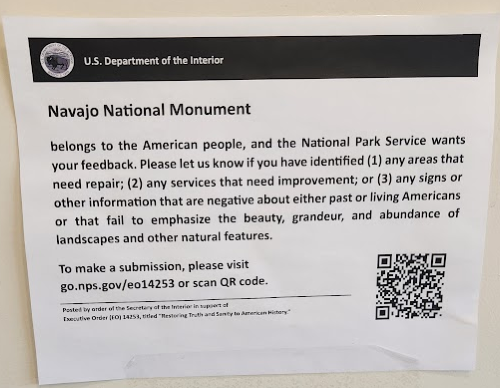
(And these perspectives don’t even touch on his nonsensical order to remove signs that don’t praise Americans or the beauty of the natural world, effectively creating an ahistorical record at our national parks and historic sites.)
Burgum sounds like someone who thinks human value could be boiled down to the elements held in our bodies, something like $5.
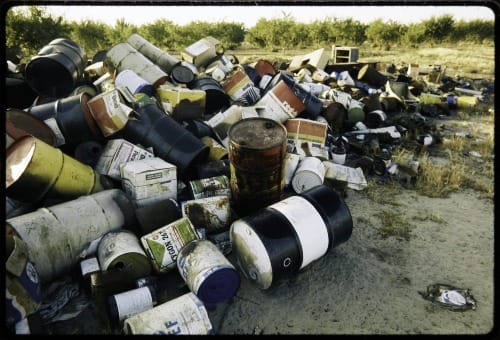
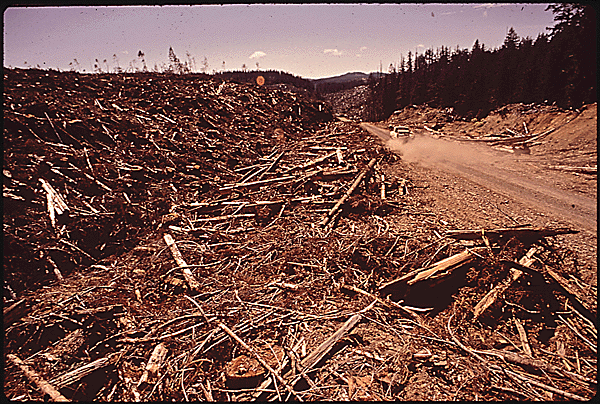
Political leaders rightfully tout a rising GDP, but that has often led to ugliness and, as President Lyndon Johnson said, “Ugliness is costly.”
The phrase came from a special message President Johnson sent to Congress on February 8, 1965, on “Conservation and Restoration of Natural Beauty.”
“Beauty is not an easy thing to measure,” President Johnson said. “It does not show up in the gross national product, in a weekly pay check, or in profit and loss statements.”
The president’s statement described a variety of ways Americans needed to maintain and restore beauty.
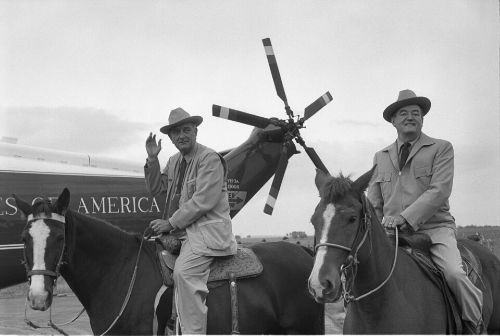
Johnson’s message came at a critical time. A few weeks earlier, he had taken the oath of office after a resounding victory in the 1964 election. The 89th Congress had just been sworn in, about to become arguably the most productive Congress in history. Popular sentiment for the environment had been building since 1962 when Rachel Carson’s Silent Spring appeared. The Wilderness Act passed just five months before Johnson’s message to Congress and protected more than nine million acres as wild places where commercial activity was not allowed.
Johnson took this moment to present his vision for “a new conservation.” As such, the statement was filled with proposals for new laws and programs—for pollution abatement and park creation, for human health and landscape beautification.
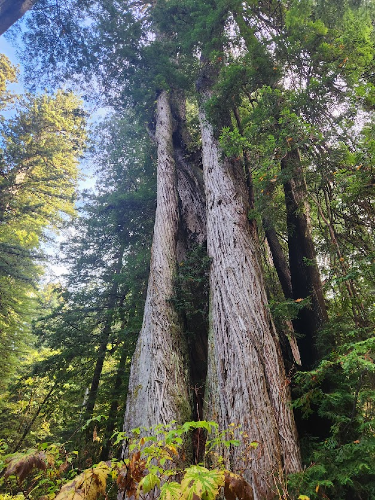
Underlying the legislative wish list, though, were values expressed carefully—values not rooted in financializing everything.
“For centuries Americans have drawn strength and inspiration from the beauty of our country. It would be a neglectful generation indeed, indifferent alike to the judgment of history and the command of principle, which failed to preserve and extend such a heritage for its descendants,” Johnson opened.
This heritage required careful stewardship. But Americans had not always paid attention.
“It is true that we have often been careless with our natural bounty,” Johnson said.
Because of that, the nation required this new conservation framework. No longer focused only on maximizing productivity and efficiency, conservation now demanded something higher:
Our conservation must not just be the classic conservation of protection and development, but a creative conservation of restoration and innovation. Its concern is not with nature alone, but with the total relation between man and the world around him. Its object is not just man’s welfare but the dignity of man’s spirit.
And to make this work, Johnson understood, it had to be rooted in justice and everyday life. “Beauty must not be just a holiday treat, but a part of our daily life. It means not just easy physical access, but equal social access for rich and poor, Negro and white, city dweller and farmer,” Johnson said.
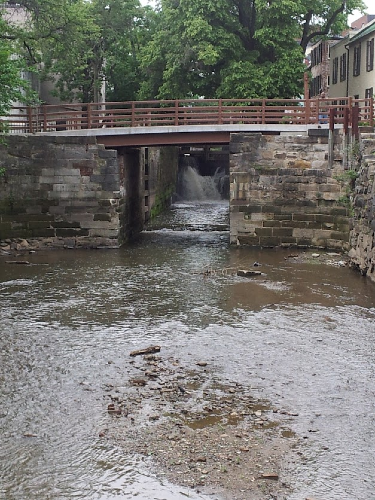
While substantial portions of Johnson’s priorities were achieved during and immediately after his presidency, this vision of justice in conservation remains unfulfilled.
It also shows why Burgum’s reduction of nature’s “value” to what finds a place on the balance sheets and his elimination of critical history are part of a united vision—one without virtue.
In Johnson’s view of new conservation, beauty would play a central role, because its “preservation is linked to the inner prosperity of the human spirit.” Implementing a world like that requires financial illiteracy, because attaching financial values to beauty—and justice—demeans both.

Comments ()