Weakening the Foundation
The building—and dismantling—of Forest Service research
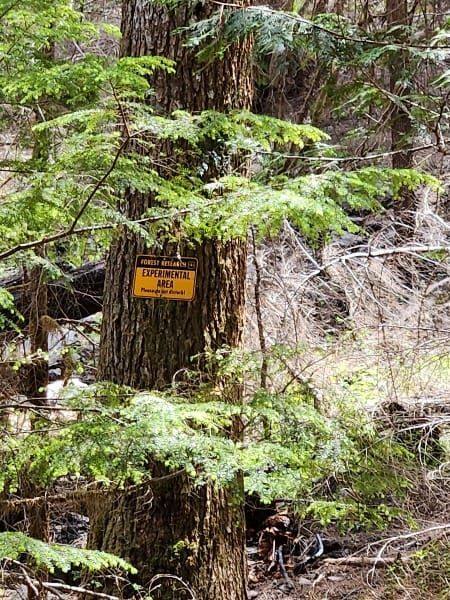
News sneaks up on me sometimes. Last week, the U.S. Department of Agriculture announced a major “restructuring” of the U.S. Forest Service. The headline-grabbing topline is the agency’s headquarters are moving to Salt Lake City—in the heart of anti-public lands country. With my head down in other projects, I did not realize this was coming. I started studying the Forest Service my first semester in graduate school, so I maintain a long-standing interest in the agency and was alarmed.
The USDA announcement contains details and rationalizations that are transparently propagandistic, citing at one point the president’s “courage to do what is right by the American people.” Any press release in any administration includes soaring rhetoric and best-case cheeriness, so some of this can be expected. But the details matter.
The announcement quotes the Forest Service chief, Tom Schultz, saying this reorganization extends “the vision set forth by President Theodore Roosevelt and Gifford Pinchot more than a century ago.” To be clear, it does not; it cramps and reverses it. But Schultz might be forgiven his error, because he is the first chief who has never worked in the Forest Service before—a glaring gap and ignorance that he sees as a strength. One of Pinchot’s achievements as the Forest Service’s first chief was building a strong esprit de corps, something Schultz cannot understand and seems likely to lead him astray.
If you bear with the press release long enough, you will discover its plan to “consolidate leadership of its research enterprise.” This means several things, but its most direct translation is the Forest Service will close at least 57 research facilities. The existence of this research expertise is the consequence of a long history.
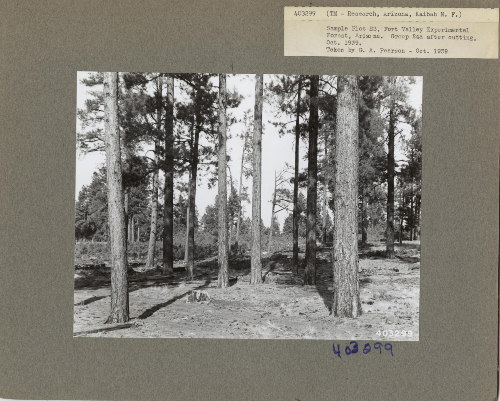
Federal forest research started even before the agency existed and developed into a basic structure in the Forest Service’s first generation.
In 1876, Congress began funding the USDA to gather facts about the nation’s forests, an appropriation that lasted eight years. The resulting Reports upon Forestry, prepared by Franklin Hough, furnished foundational data (mostly descriptive) used to understand forests and began recommending better management of them. Among other things, Hough advocated for a network of research facilities.
When Pinchot took charge of the USDA’s Division of Forestry in 1898, he shifted “research” to “investigations.” This rhetorical move, which held in place until 1915, was meant to signal that government forestry would be studying practical problems rather than theoretical ones, or what is sometimes distinguished as applied science and fundamental science. By 1902, Pinchot’s Forest Investigation unit accounted for one-third of the division’s budget. A key distinction was becoming established: separate research and management arms of federal forestry.
The Forest Service established its first experiment station in 1908 in Fort Valley, part of the Coconino National Forest near Flagstaff, Arizona. The system of experimental forests and ranges has grown into more than 80 sites. (The new reorganization plan does not say what will happen to these.) These places immediately began critical studies that showed how different tree species grew, the relationship between forest cover and stream flow, best practices for nursery growth, and more. By now, some experimental forests have data from a century’s worth of research, an irreplaceable circumstance if long-term thinking is considered important.
In 1910, the Forest Service established the Forest Products Laboratory in Madison, Wisconsin. The lab studied wood itself, searching for ways to make the wood-products industry less wasteful. When it opened, new Forest Service chief Henry Graves shared the appalling waste in the timber industry. One-quarter of a tree cut was left on the forest ground. Half of what arrived at the mill was discarded. More disappeared as waste products during milling and manufacturing. Figuring how to use and reduce that waste was the lab’s priority to boost conservation and efficiency.
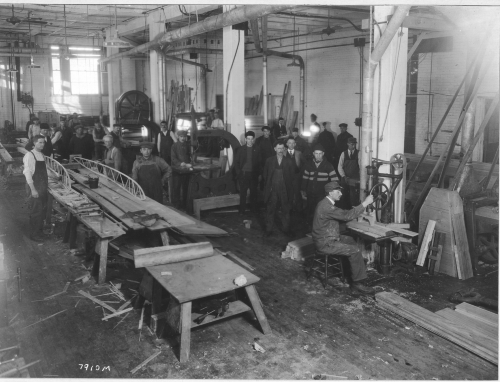
The agency built a strong research capacity, and in 1915, it formally created the Branch of Research, which firmly separated administrative and research activities. Critics within and beyond the Forest Service had questioned whether research was significant and independent. To be credible, scientific research needed to follow the scientific method and not be interfered with by local foresters promoting their own special projects. Most research activities were independent and protected from administrative interference, although this has always been a challenge.
Finally, in 1928, Congress passed the McSweeney-McNary Act. Earle Clapp, who headed the Branch of Research from 1915 until 1935 when he became associate chief, advocated for a comprehensive research program. The resulting law authorized forestry research and experiments and included more than $3 million over the next decade. According to Samuel Trask Dana’s classic study, Forest and Range Policy: Its Development in the United States (1956), the law “laid a solid foundation for the enviable record of accomplishment subsequently made.”
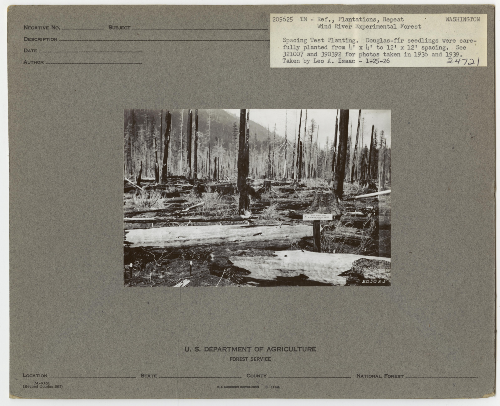
The McSweeney-McNary Act did not end USFS research or congressional investment in forestry, but it capped the foundational period. In a short time, a program of gathering basic information developed into a national system where independent research could be systematized and contribute to managing millions of acres of forests. Over the subsequent century, Forest Service and affiliated scientists transformed the understanding of North American forests.
The reorganization announced last week weakens this legacy and does so for no principled reason. According to the announcement, the Forest Service’s reorganization shifts more responsibility to state offices, rather than the regional offices that have existed from the start. Current leaders cite the importance of decentralized structures, a common perspective from the Forest Service’s founding (and among political conservatives). However, in research, these same leaders cite the importance of consolidating authority, which is why they are closing research facilities and unifying research administration in Fort Collins.
When opposite rationales are given for a single action, it is time to search for other reasons. There are no principles involved, only outcomes—outcomes that weaken the agency.
Comments ()