All 1,162 Pages
What I learned when I finally read The Power Broker
In 2007, I sat in a huge conference hotel atrium in Baton Rouge across from a historian I admired. He wrote the first book of environmental history I ever read, which redirected my life's ambition. He edited a book series—in my opinion, the best of the field—and we were meeting to discuss whether my book manuscript on Justice William O. Douglas's conservation was suitable. I doubted my book would be selected, and I fidgeted with fits of inferiority.
Sometime during that conversation, he approached the challenge of writing about a historical figure who might have done important and positive things but also contained less admirable qualities. This was not a key theme to my book manuscript, but Douglas was more brilliant and more flawed than most. Then this august historian mentioned Robert Moses—who I didn’t know—and a great biography of him by Robert Caro—who I also didn’t know. That biography wrestled with those same types of challenges, he said.
But I didn't have the reference points to understand. The historian passed on my book manuscript, and it ended up in a more appropriate home for what I aimed to do with it.
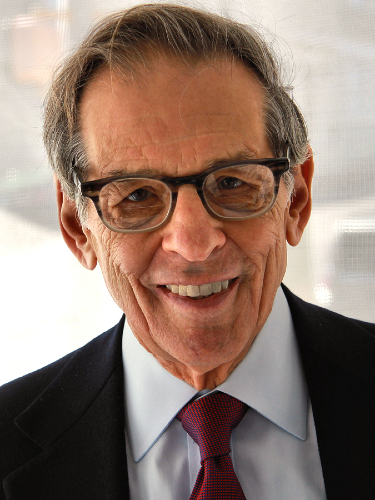
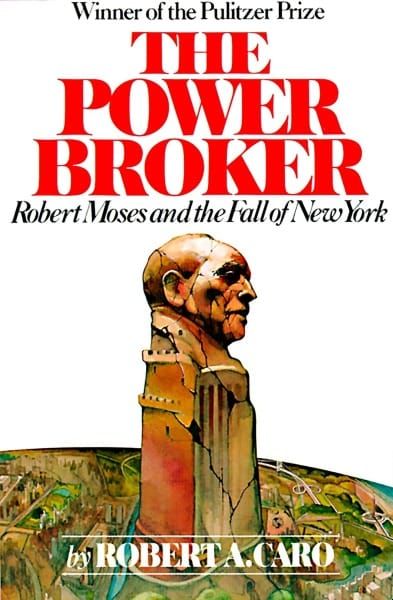
Had I known more about The Power Broker: Robert Moses and the Fall of New York (1974) during that meeting I would have been crestfallen and overwhelmed and not merely confused. Caro's book includes 1,162 pages of text, won the Pulitzer Prize, and remains the highest standard of what biography, history, and nonfiction might achieve. The weight of that—the literal weight of the book and the metaphoric weight that I might learn from Caro's approach—would have sunk me as I sat a few blocks from the Mississippi River. Giving a beginner a master's work as a model is risky.
To mark the 50th anniversary of The Power Broker, the wonderful 99% Invisible podcast initiated a yearlong read-a-long with monthly breakdowns of the text with insightful conversations with guests, including Caro himself. I bought the book and committed to joining 99PI, soon fell behind, and nearly gave up. But I saved the podcasts and, after some gaps, kept at it.
On Sunday, I closed The Power Broker after all 1,162 pages, the most I've read for a single book, surpassing David McCullough's Truman, a book I read in the winter of 1999-2000 that had been my previous longest book at a slim 992 pages. From Truman I learned plenty about the president. But I grew to dislike McCullough's exhaustive detail that landed without the criticism I believe Truman deserved.
The Power Broker offered something else. Caro was, obviously, just as detailed as McCullough. You can hardly write 1,000-page books full of generalities; you need details embedded in details on top of more details. But Caro cared about writing in a way that would not only bring alive the past through specificity but also render judgment about it.
The writing conveyed that judgment.
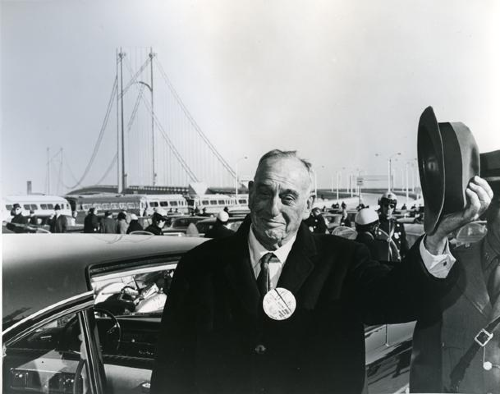
For those of you who, like me in 2007, don't know who Moses was, he was a reformer in early twentieth-century New York who dreamed big dreams about transforming greater New York City with amazing parks and parkways that would allow people to move more freely, have access to more outdoor space, and create the world's best metropolis. For more than 40 years, in an ever-greater concentration of power, Moses enacted much of this ambition through the control of various public authorities. He was never elected. He never bowed to mayors or governors. In fact, quite the reverse. He cared little about who he squashed along the way. His reform impulse and great dreams never left him, but his ability and willingness to wield power far outpaced any sense of restraint, fairness, or empathy.
During his reign, he built houses—and destroyed the homes and otherwise displaced 500,000 New Yorkers along the way. He built roads to move New Yorkers—and created a car-dependent city with worsening congestion problems. He built parks for the immigrant working classes—and cared little for their homes and lives, comparing them and their Black and Puerto Rican neighbors to animals. The map that served as the frontispiece of The Power Broker shows the achievement but masks the costs.
What Caro achieves in The Power Broker is remarkable. You root for and admire Moses, then you are disappointed in him, then you condemn him, then you pity him, and finally you wish he got worse than he got. All of this is a credit to Caro’s deep understanding informed by exhaustive research and presented in unmatched prose.

One of the more famous chapters of The Power Broker is “One Mile,” a 34-page account in which Caro carefully describes what it took to build a single mile of the Cross-Bronx Expressway, just one of the 627 miles he built. There is nothing quite like it in my reading experience. Caro felt he could not write this book without this chapter that showed the precise human costs to a Moses plan. Caro spent time in neighborhoods where he was not welcome and where he was told to leave before darkness fell for his safety. The result tells of everything from geology to political corruption to multi-generational families being torn apart.
Caro has said repeatedly that his life's work has been to study how power actually works in the world. Once, as a young journalist, Caro was a Nieman Fellow at Harvard taking courses about urban policy from professors who had written a well-regarded book on highways. The professors tried to explain how they got built, adding new factors every week: elevation, population density, traffic patterns. One day Caro realized that these experts didn’t understand why highways get built where they do. “They get built there because Robert Moses wants them there!” Caro related in his book Working (2019).
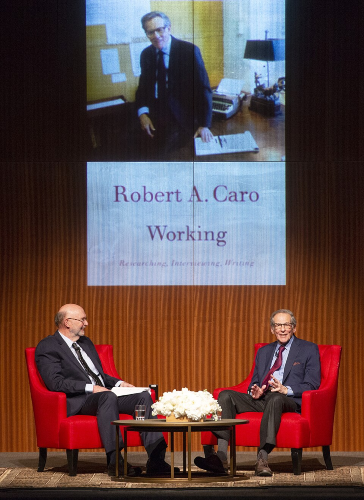
Caro the reporter always wanted to understand that layer beneath, and Caro the writer always wanted to make readers both understand and feel it. “I always liked finding out how things work and trying to explain them to people,” Caro wrote. My obsessions (and skills) are not Caro’s, but that is something I understand, even if I did not quite know it back when that historian tried introducing me to The Power Broker almost 20 years ago.
Cross-Words
Complementary pieces to this week's essay include:
 Adam M. Sowards
 Adam M. Sowards
Bonus—I was interviewed for this 99% Invisible story back in 2023:
 Lasha Madan
This week I relied on Robert A. Caro, The Power Broker: Robert Moses and the Fall of New York (1974); and Caro, Working: Researching, Interviewing, Writing (2019).

Comments ()