My Year in Books
Another idiosyncratic year-end reflection
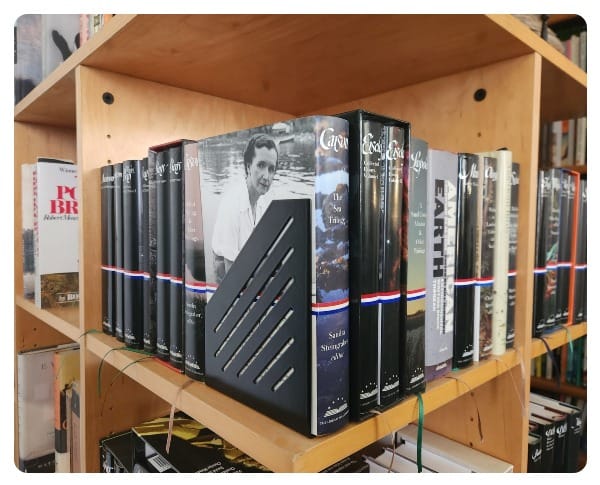
For the last few years, I’ve used one of my weekly missives to share some reading that made an impact. Every year, I’ve done it a bit differently—see examples from 2024, 2023, and 2022. I try not to just list a Top 5 but create made-up categories to enliven the year-end reading list genre a bit.
I always have a lot to choose from, because reading is one of life’s greatest pleasures but also part of the job of a writer. In 2025, I’ve completed 70 books (with the possibility of squeezing in one more today). This is a bit of a (planned) drop off from recent years when I’ve frequently topped 100 books, but that’s still plenty of good food for thought.
Best Career Capper: Ivan Doig, Last Bus to Wisdom
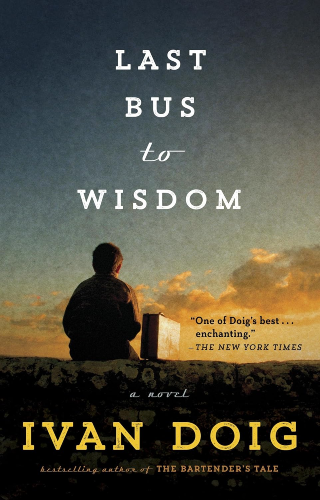
Ever since I discovered him in college, Ivan Doig has been my favorite writer. I’ve read all of his books, savoring each turn of phrase, each quirky character, each insight into the West. Doig died in 2015, the same year his last book appeared, Last Bus to Wisdom. I received that book as a gift then and could not bring myself to read it, knowing it would be my last chance to read a Doig book for the first time. I waited and waited, the book’s spine staring at me from my shelf. Finally, a decade after publication, I pulled it down and read Last Bus to Wisdom.
Saying it was worth the wait doesn’t quite capture what it meant to me to read Doig’s final book. The story, the humor, the places—all were vintage, inimitable Doig. The story is delightful as a boy traipses across much of the country having adventures because of his quick thinking. As I realized in writing about him here, I can re-read Doig and gain new insights and pleasure still. Thank goodness.
Most Provocative: Caroline Fraser, Murderland: Crime and Bloodlust in the Time of Serial Killers
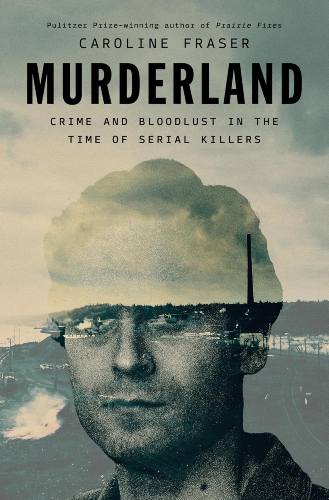
This book, published in 2025, has attracted fans and detractors already. A Pulitzer Prize-winner, Caroline Fraser turns her attention to serial killers who were especially active in the Pacific Northwest in the 1970s and beyond. She more than hints that the chemical pollution, especially lead and arsenic, contributed to the rash of violence. Some buy the claim; some dispute it. But the book is provocative, I think, by a subtler, more powerful argument. This isn’t true crime in a narrow sense. Instead of focusing only on the murderers, Fraser indicts the violence everywhere in the era when she grew up (in the same region, a decade before me) from serial killers to highway engineers to manufacturers who sent toxics into the world around them without fear of consequence. Everywhere you looked, design was allowed to contribute to death with little accountability. This is a more provocative claim than “lead made serial killers” that some have reduced Murderland to. The writing itself—a drip, drip, drip of details—offered a type of accumulation of evidence that made conclusions unavoidable.
The Book I Wished I’d Written: David Gessner, Leave It As It Is: A Journey Through Theodore Roosevelt’s American Wilderness
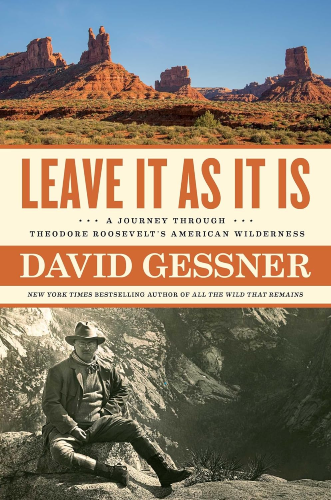
You can’t be an environmental historian of American public lands and ignore Theodore Roosevelt. I haven’t tried to ignore him, but I haven’t gone out of my way to learn more, either. TR had an outsize personality and influence, something that tends to turn me off in historical figures and contemporaries alike. David Gessner travels in Roosevelt’s footsteps and engages with his legacy honestly in Leave It As It Is. And that legacy is complicated. TR held vile beliefs—and inspiring ones. I’m not sure it’s fashionable to say that these days. We like good or bad and haven’t the patience to wrestle with the good and bad. Gessner, though, does well to contextualize Roosevelt in his own time facing decisions in the context not of 2020 (when it was published) but 1903 (during the campaign tour that forms a backbone to the narrative–and which I explored in part here). It's a good reminder about fairness—both when confronting historical figures in fact and composing them in prose.
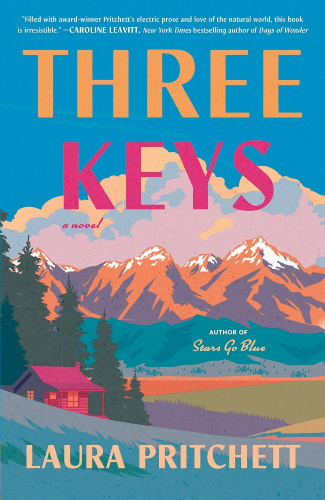
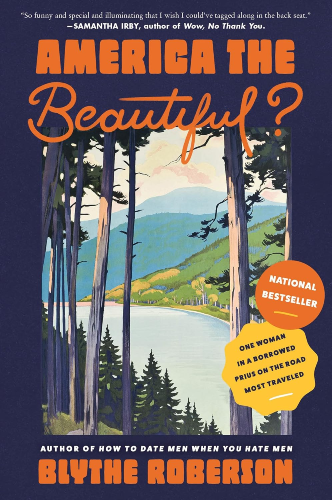
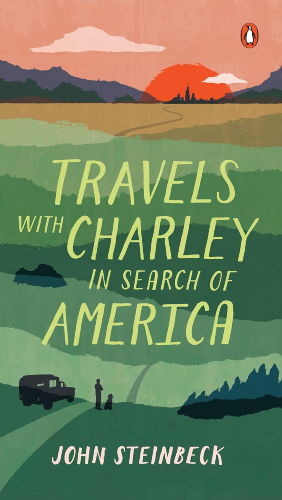
Favorite Road Trip Books (3-way tie): Laura Pritchett, Three Keys; Blythe Roberson, America the Beautiful?: One Woman in a Borrowed Prius on the Road Most Traveled; and John Steinbeck, Travels with Charley: In Search of America
If you’ve been reading Taking Bearings this year, especially in the fall, you noticed a distinct road trip theme. Accompanying me on those trips were several books that embodied that mobile experience. All these road tripping books offered more drama than my own experience, which made them excellent companions and counterpoints.
Three Keys by Laura Pritchett, my friend whose work featured in last year’s roundup and the one from the year before and in a dialogue here, tells an entertaining and engaging story about a middle-aged widow on the road breaking into houses, finding meaning and herself, and making a difference in the world. Once again, Laura has made characters and places thrum with energy, infused with great empathy and inspiration.
Blythe Roberson’s America the Beautiful?: One Woman in a Borrowed Prius on the Road Most Traveled is a hilarious romp through national parks in a test to see if the Great American Road Trip truly represents freedom. This book brought me to laughter in several park campgrounds. Yet it also forces some reality checks against the more prototypical road trip books, layering in enough commentary to keep your mind engaged while recovering from belly laughs.
John Steinbeck’s famous road trip with his dog Charley already received some attention here (and an extended essay I wrote about it will be published next year). It represents one of the best efforts and most famous of the genre. Travels with Charley gives us glimpses of a national landscape and writer poised for change as the 1960s begin.
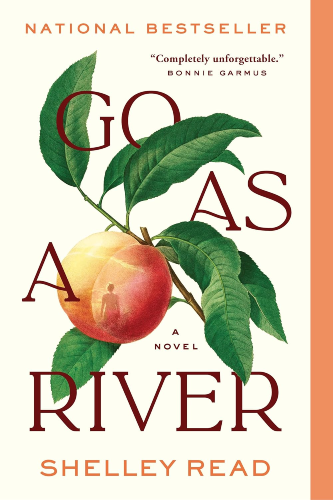
Favorite Novel: Shelley Read, Go As a River
Many reasons recommend Go As a River by Shelley Read. The plot and protagonist bring the book alive, but for me, place might top the list. The story is one of tragedy and persistence against a backdrop of regional transformation in Colorado. As much as I cared for the characters, I was drawn in by Read’s rendering of the orchards, mountains, and rivers of Colorado. The book’s empowering richness means that every reader will come away loving it for different reasons.
Research shows that few Americans read for pleasure on a given day (around 16%). Knowing that, my heart sinks. So much is lost when books are not part of our lives, or at least that would be the case for me.
I once did an exercise that asked me to describe what I saw in my home as a way of revealing what I valued. It turns out that by that measure family and books top my list.
I used to make reading goals, but I won’t be guided by any such thing in 2026. An organic list will grow, following my research needs and my endless curiosity that grows with every page. I know books will be read, pleasure will be gained, and new worlds revealed. The invitation is open to anyone.

Comments ()