Paradox at Manzanar
On living with historical paradoxes
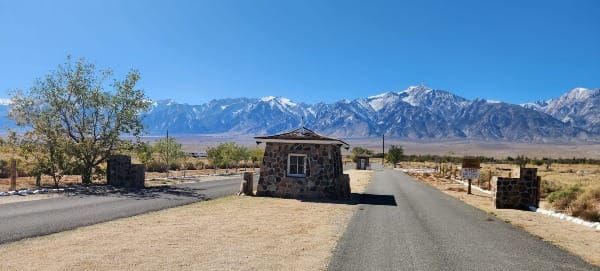
The Sierra Nevada rise sharply from the valley. They stretch north-south far enough that they seem to encircle, blocking the natural escape to the West. Light snow intermingles white with the gray rocks above where the green trees fill the folds between ridges sloping to the brown valley floor. The mountains stand beyond the squat, stone guardhouse that regulates those who come and go.
“The tremendous beauty of those peaks was inspirational, as so many natural forms are to the Japanese,” Jeanne Wakatsuki Houston wrote in Farewell to Manzanar (1973), a memoir of her time below the range. “They also represented those forces in nature, those powerful and inevitable forces that cannot be resisted, reminding a man that sometimes he must simply endure that which cannot be changed.”
Few places are as emblematic this paradox as Manzanar National Historic Site. The mountains stand for solidity; the dust and brush everywhere are ephemeral. Almost all the buildings that imprisoned more than 10,000 people from 1942 to 1945 are gone, yet the foundations that remain and those still marked by white rocks leave an impression of both permanence and transience. The injustice imposed on the people imprisoned here sits alongside their strength and persistence.
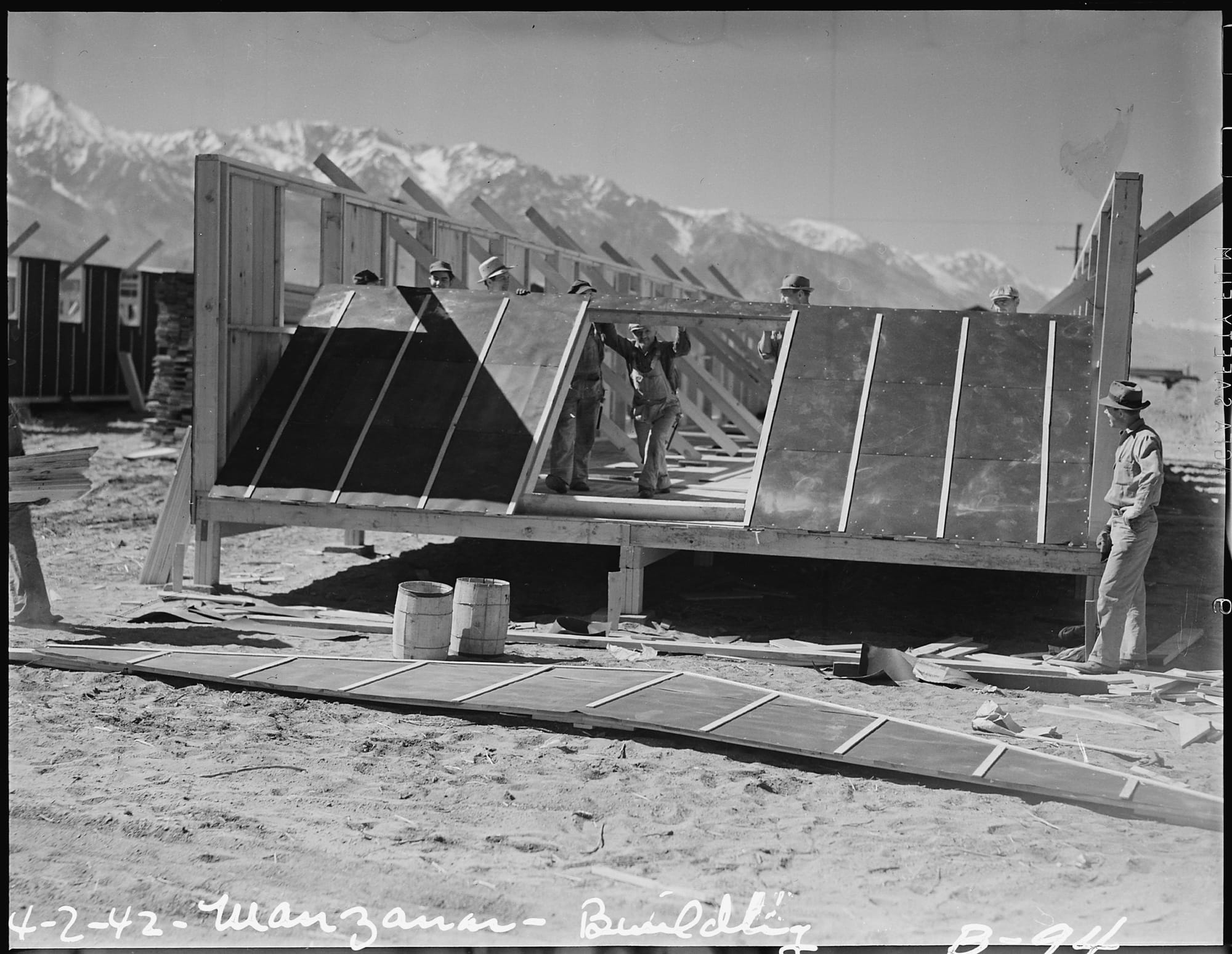
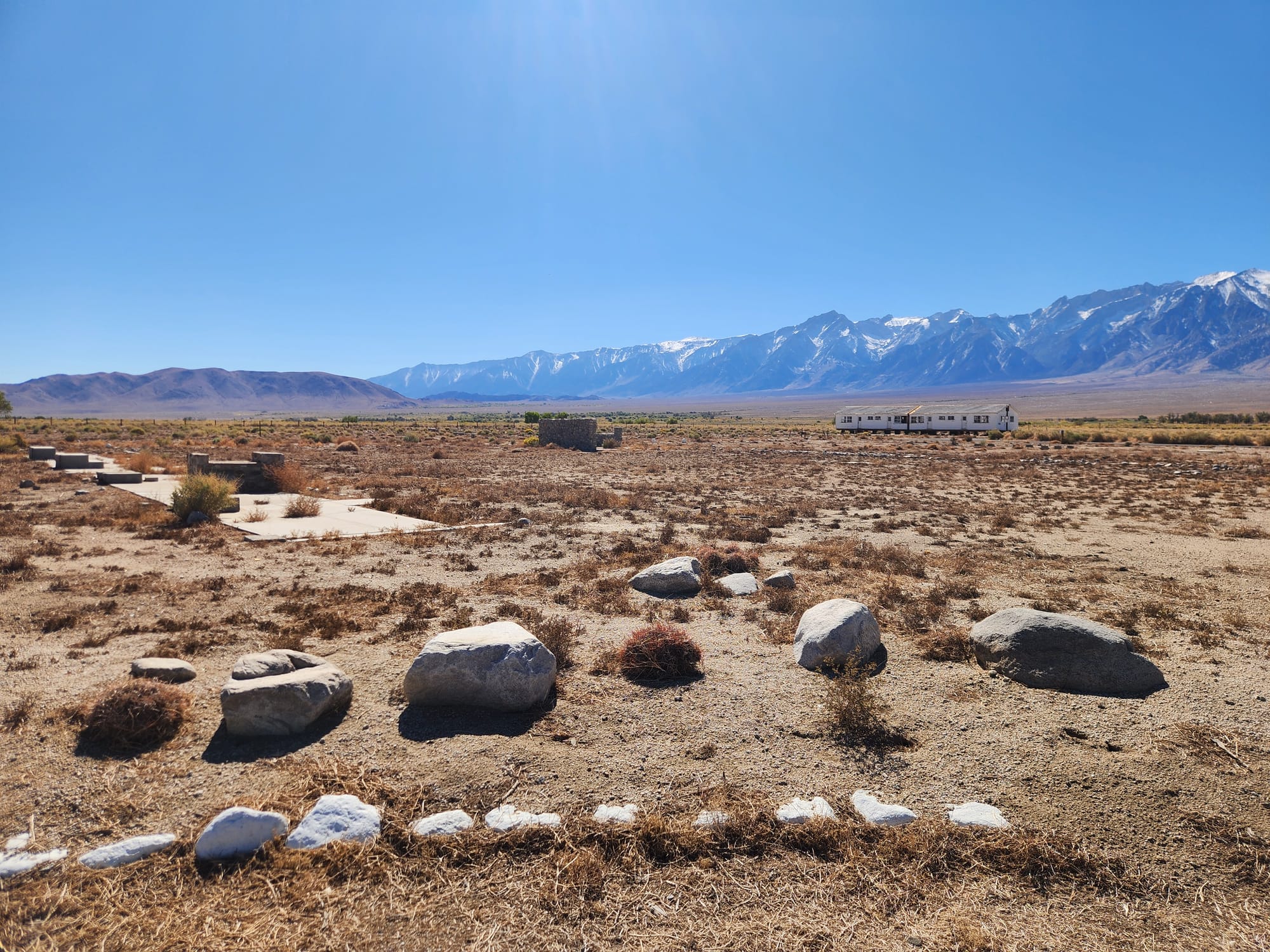
Construction of Manzanar April 1942, two months before officially opening, and remnants in 2025. (National Archives and author photo)
I swung through Manzanar last fall, almost exactly 80 years after it closed. I couldn’t stay as long as I would have liked, and a government shutdown meant none of the facilities were open. Still, I moved through the camp’s grounds with a historical divining rod, trying to sense its history.
Japanese-American incarceration is frequently cited as one of those infamous events in American history that is not taught. I’ve lost track of the times I’ve heard someone say they never heard of it until they were adults. I don’t always believe these confessions. I know the students I have taught don’t remember everything they were exposed to; many things are taught, then forgotten.
The ignorance of these concentration camps on American soil has faded in the last two generations. Like many people now, I never remember not knowing about it.
But reading Farewell to Manzanar in college, or teaching a similar book—Nisei Daughter by Monica Sone about a similar camp in Idaho—is not the same as being on the grounds and seeing the mountains and feeling the sun and smelling the desert air.
And none of that comes close to walking in a garden or a cemetery among Manzanar’s ghosts.
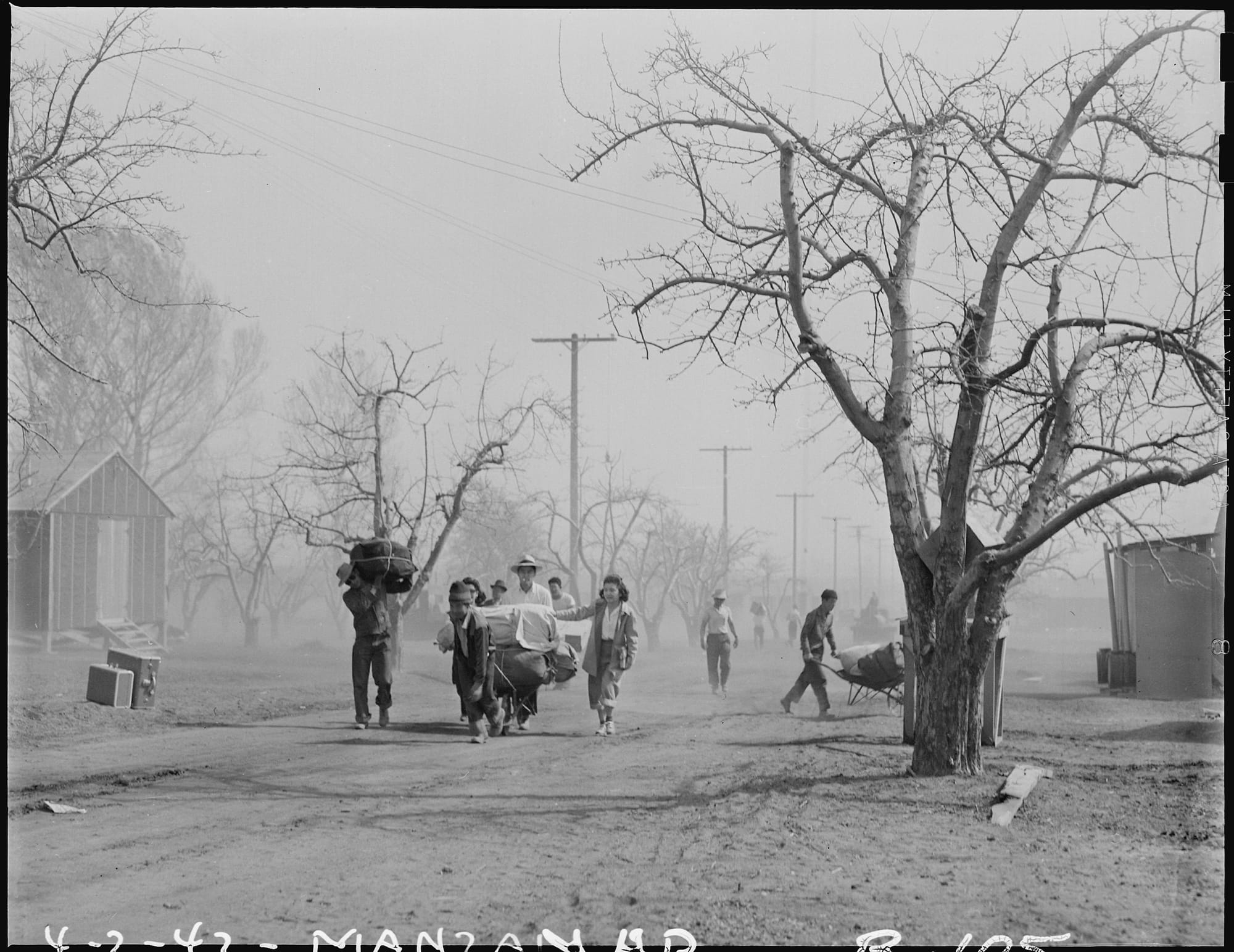
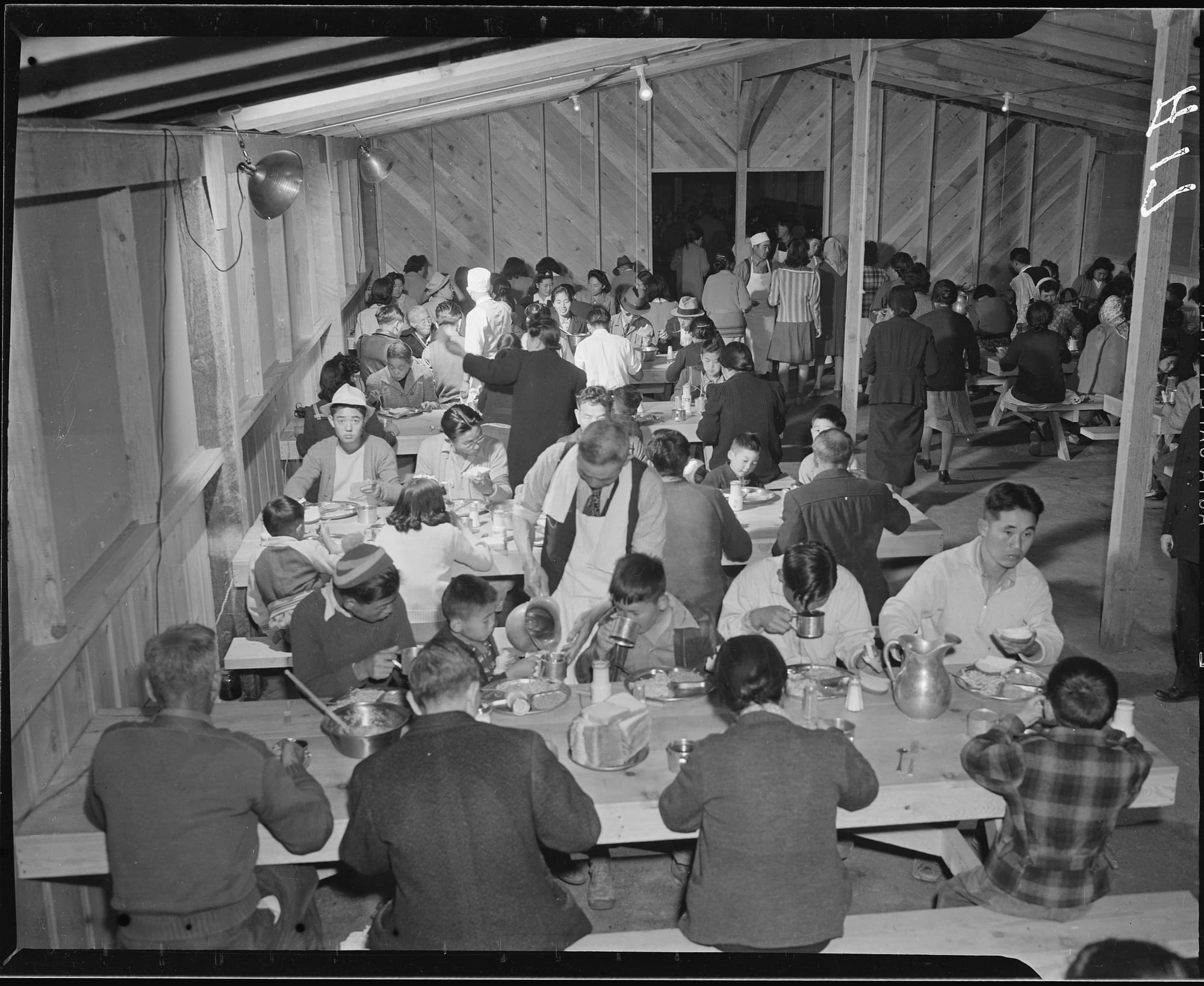
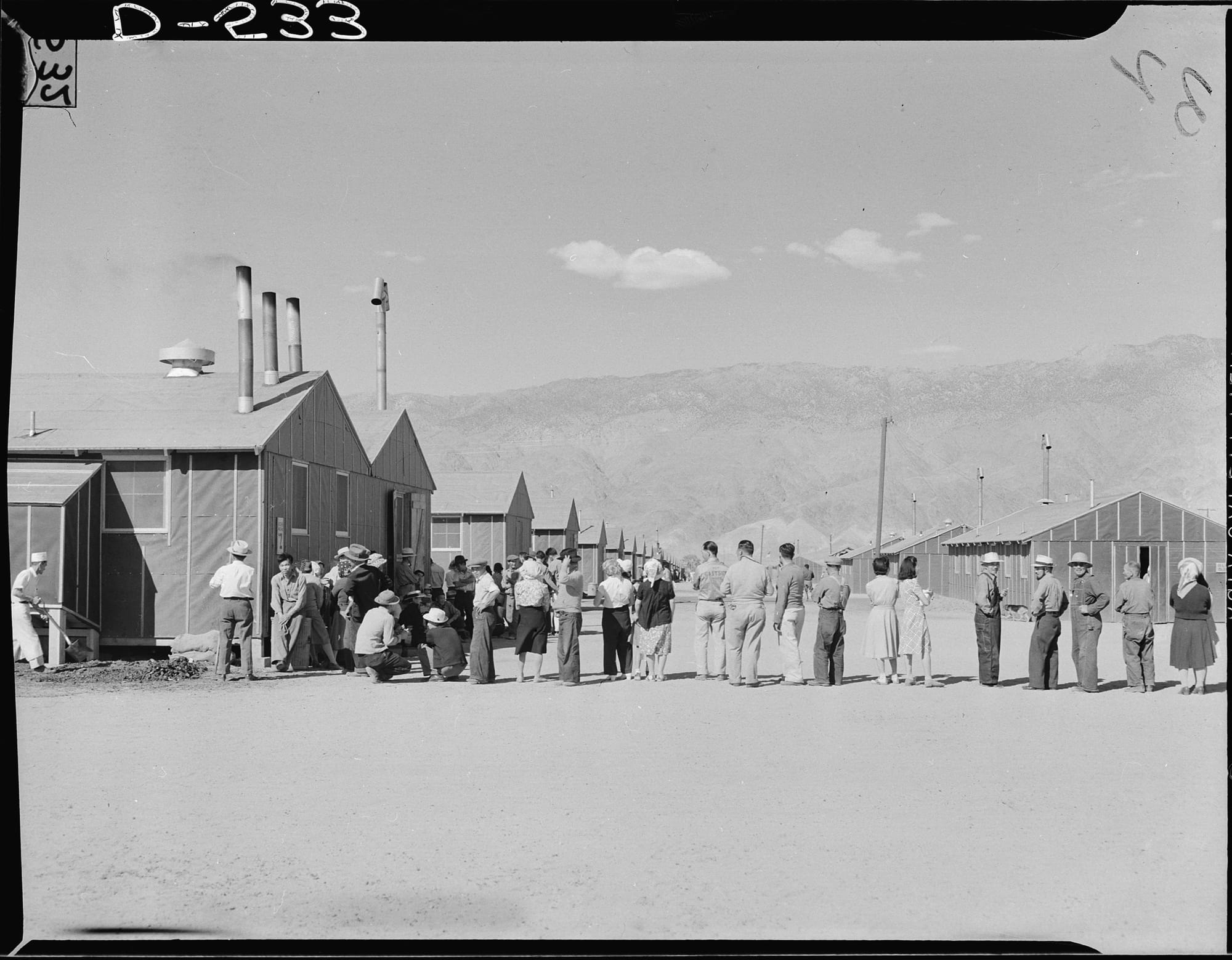
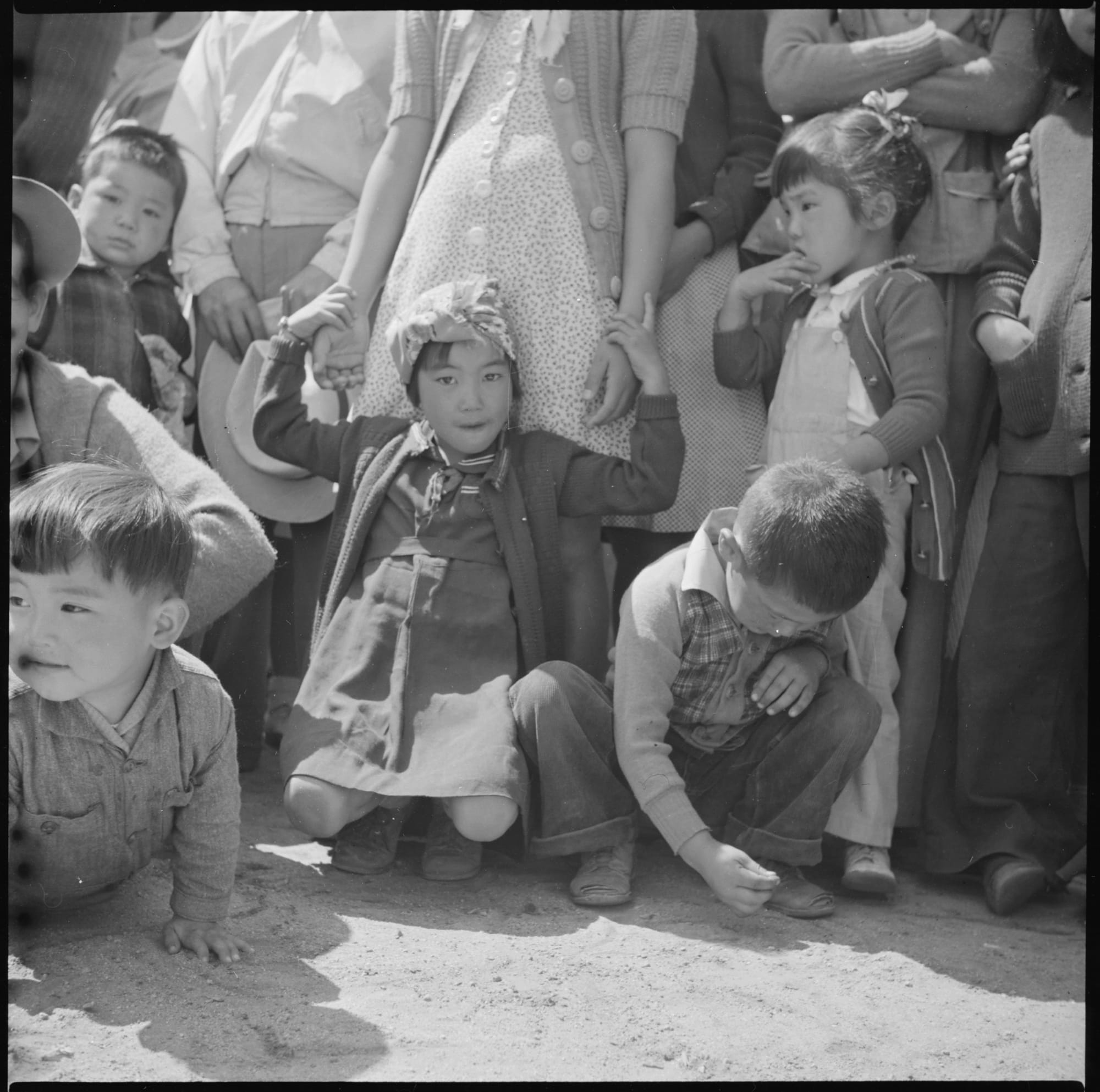
Spring 1942. (National Archives)
The Paiute lived in the Owens Valley when white settlers arrived in the 19th century. The small town of Manzanar—Spanish for “apple orchard”—was founded in 1910. A decade later, almost 5,000 acres of fruit trees were being irrigated. However, Los Angeles had acquired the valley’s water rights, and in dry years, none was left for agriculture. Manzanar was mostly abandoned by the time the Depression set in.
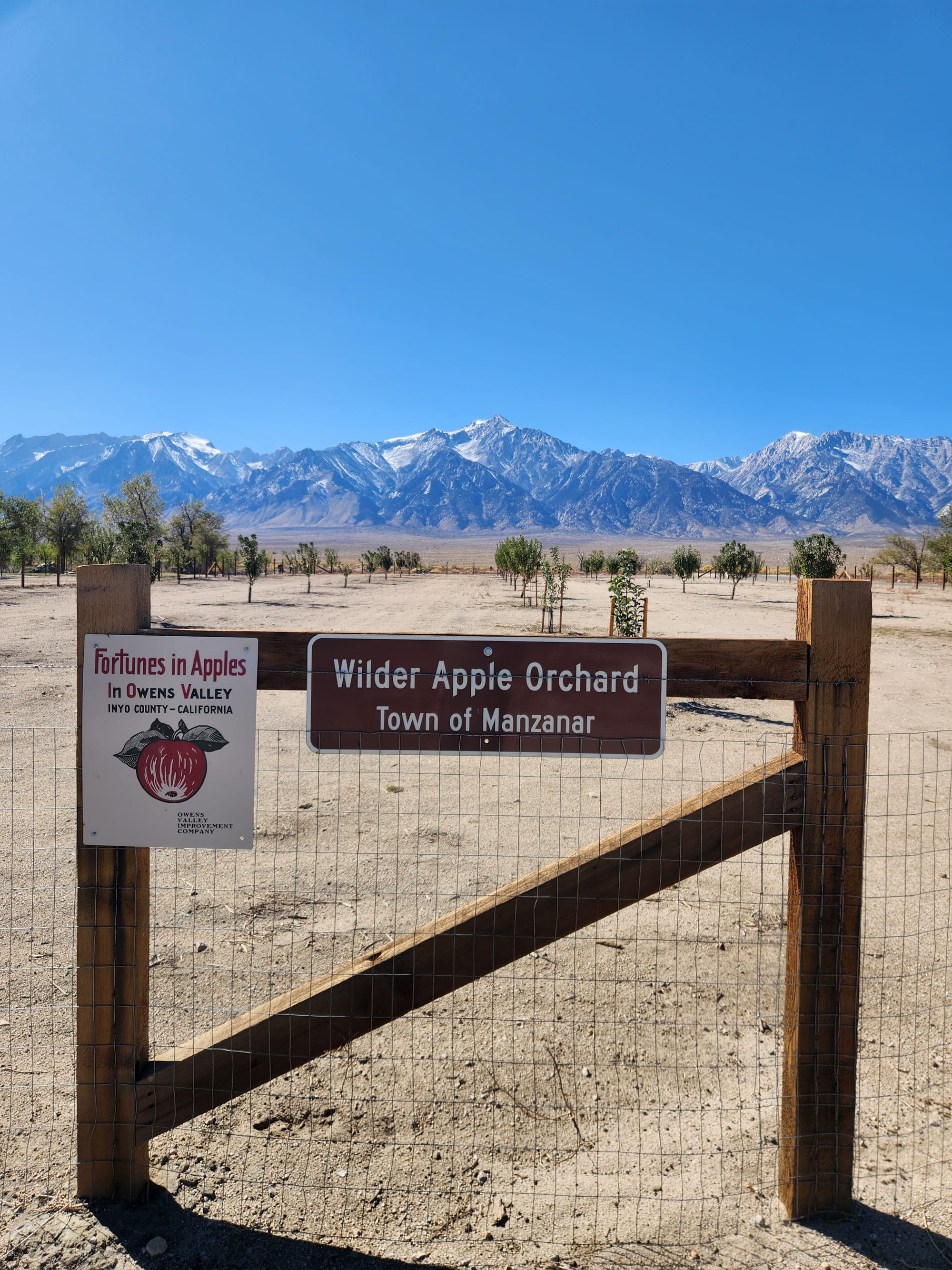
Today, orchards are there again, not for commercial production but to satisfy the longing for hints of what came before. Even without the metropolis taking this rural valley’s water, a booming orchard economy would not have lasted here. The American West is littered with similar agricultural ghost towns where geography and economics were always going to destroy dreams. But seeing the fruit trees and a revived park can remind us that the drab black-and-white photos from the 1940s hide glimpses of beauty and vibrant life even amid unquestionable injustice.
I walked along the orchard fence and through the park. Schoolchildren sat eating their lunches among the flowers and water features. I wondered what they understood and whether this class visit would make a lasting impression. No doubt, some will hold memories tight and others will let theirs go on the wind.
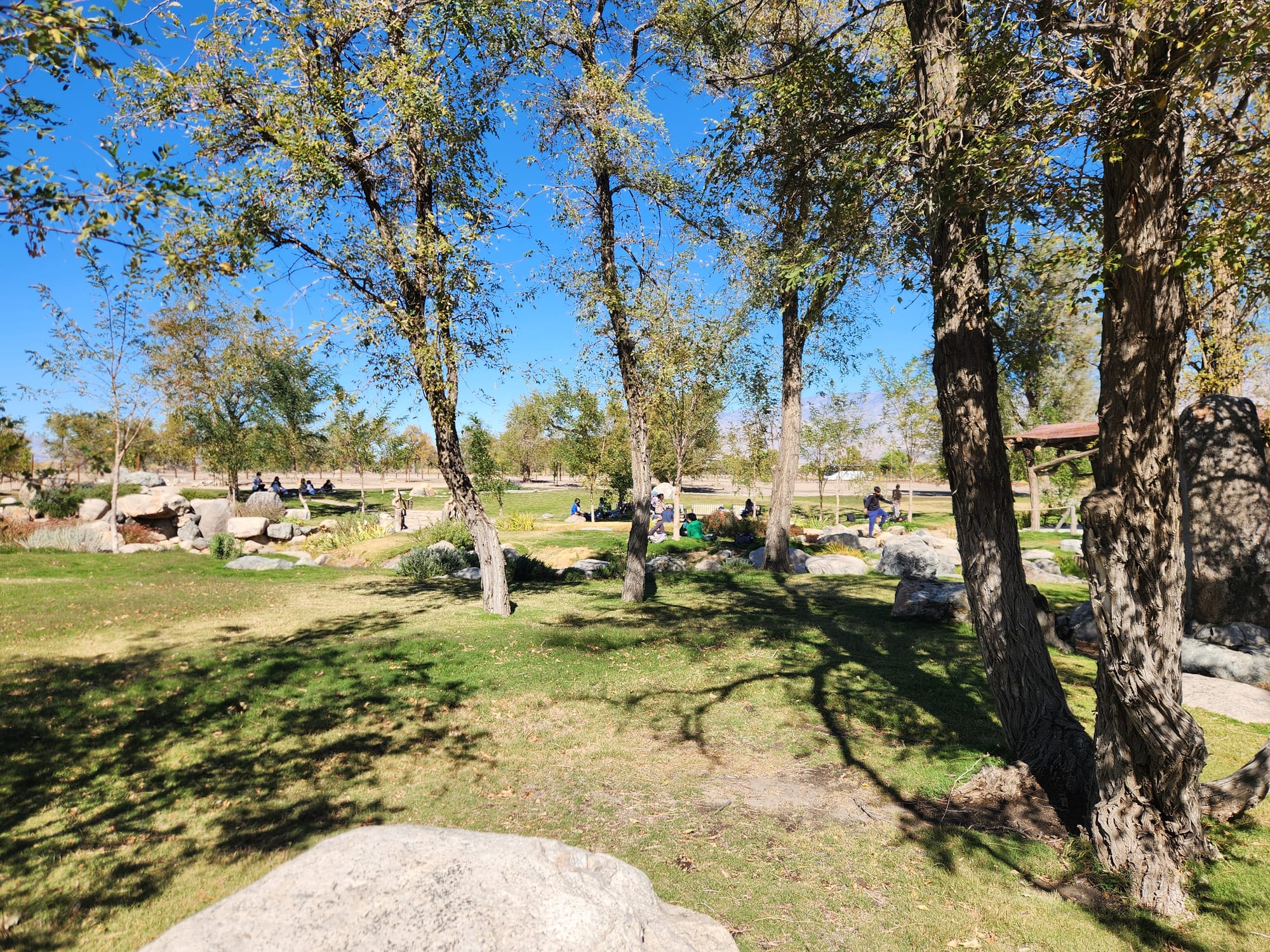
I moved on, toward the edge of the historic site.
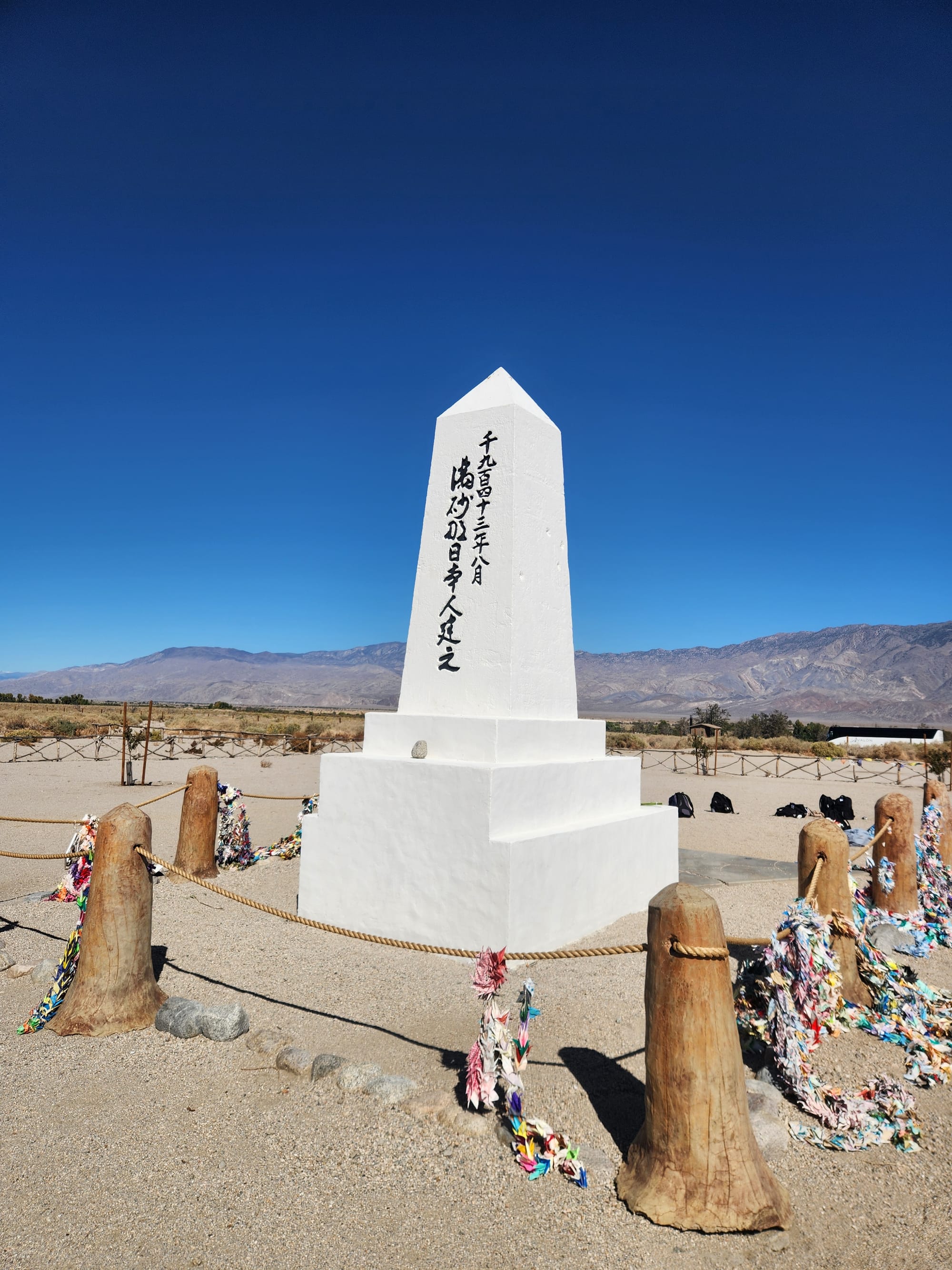
I hoped to have the cemetery to myself, but another set of children clustered near the trees at its far edge, hoping for the shade’s slight benefit. It is hard to call the cemetery anything but stark. The ground was gravel, and the large cemetery square sits mostly empty, although more than 100 people died at this camp, far from their homes.
The cemetery’s center—a white obelisk—draws attention. Soul Consoling Tower, it reads. Along the rope and fence posts are attached thousands of paper cranes left in colorful, peaceful remembrance.
I move toward the edge to gaze at the mountains and a replica sign, warning of area limits and the forbidden beyond. The sign called them residents. But they were imprisoned—hence the reminder that (armed) sentries were on duty. Even still, I know some of those “persons of Japanese ancestry” stood on this fence line and heard the mountains’ call.
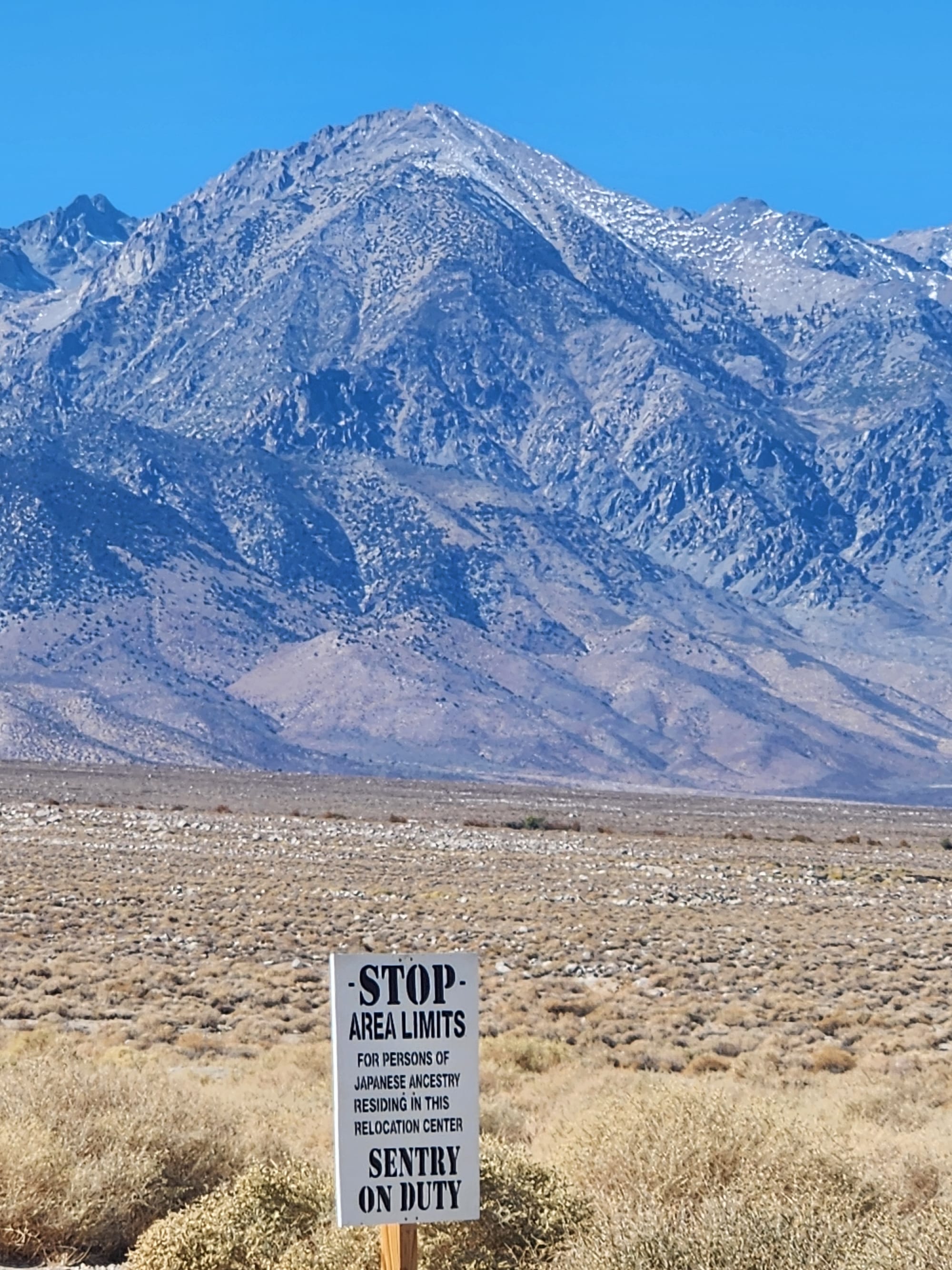
Few people I know would rationalize this camp today. Few people I know would celebrate Japanese-American incarceration as part of the “greatness of the achievements and progress of the American people,” which is the direction the Secretary of the Interior has provided for signs in national parks like Manzanar.
A historical reckoning with Manzanar and places like it demands honesty. And any accounting of this place necessarily condemns the gross violation of human rights carried out here.
As I moved through this astonishing place, I admired the gardens; the baseball field; and the signs that showed places of worship (Christian and Buddhist), the chicken ranch, and even the Manzanar Free Press. Those who lived here from 1942 to 1945 made a community, but the foundational fact is that none of it was by choice.
No one chose to live—or die—here beneath these long shadows of the Sierras.
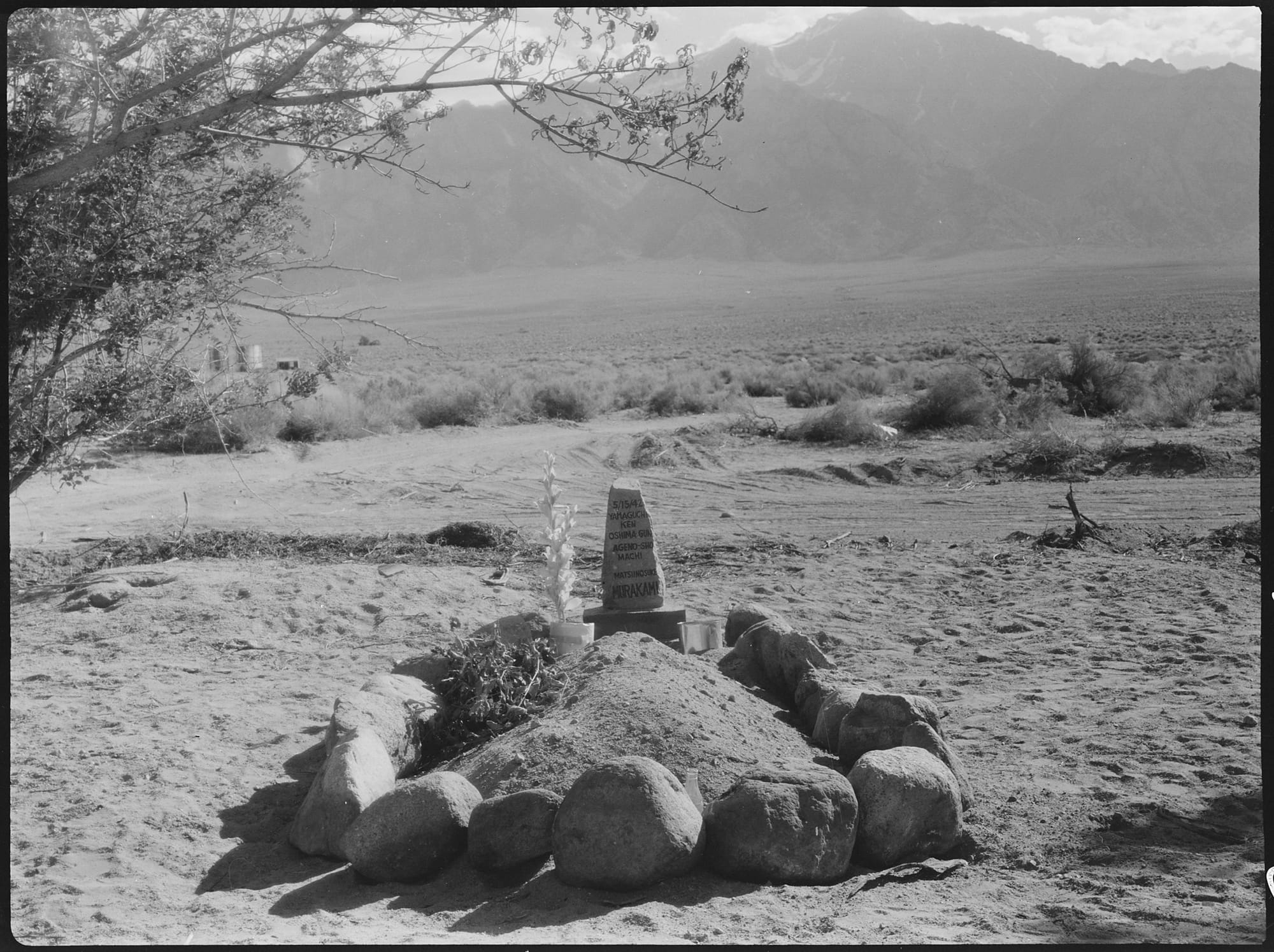
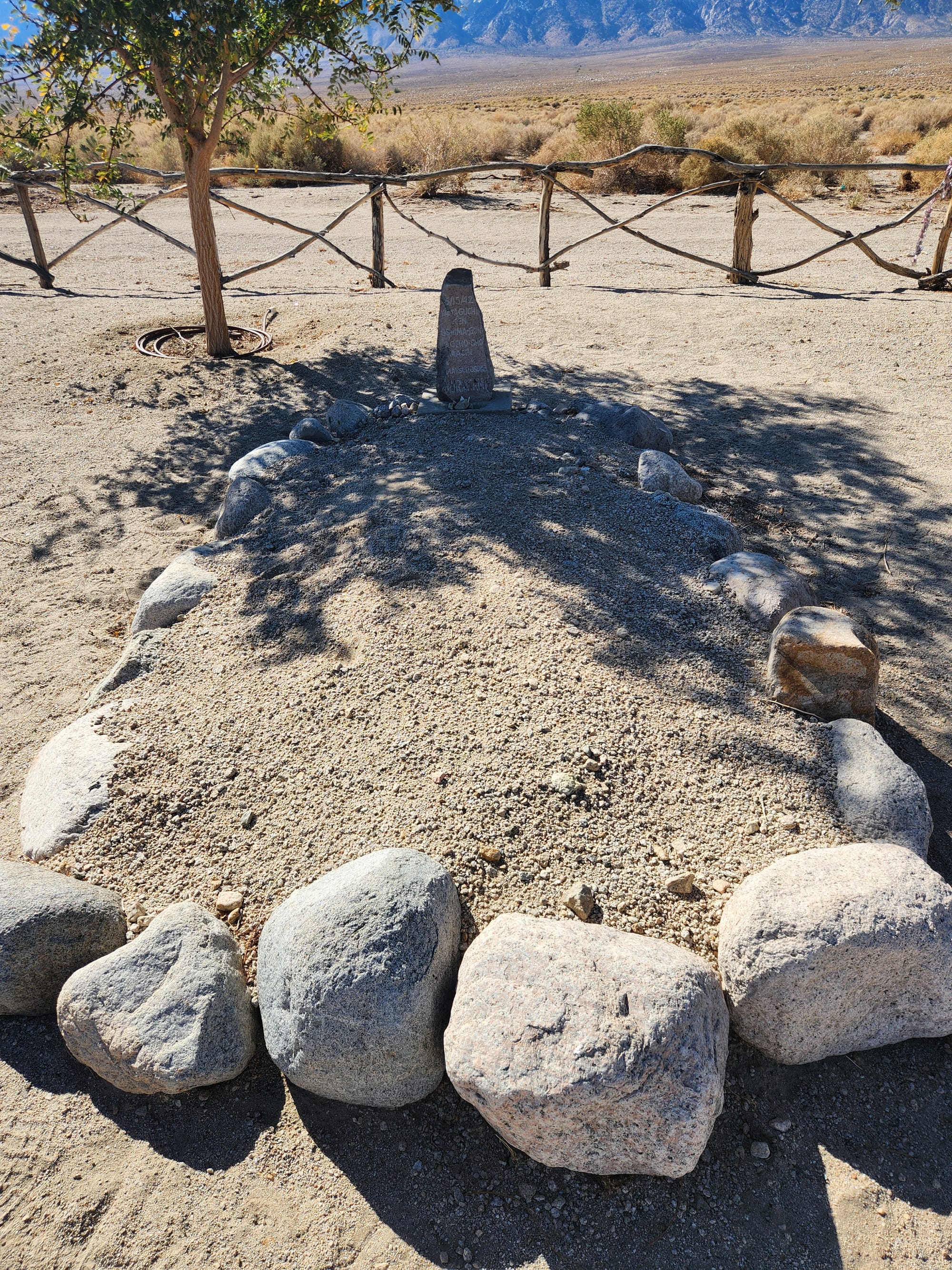
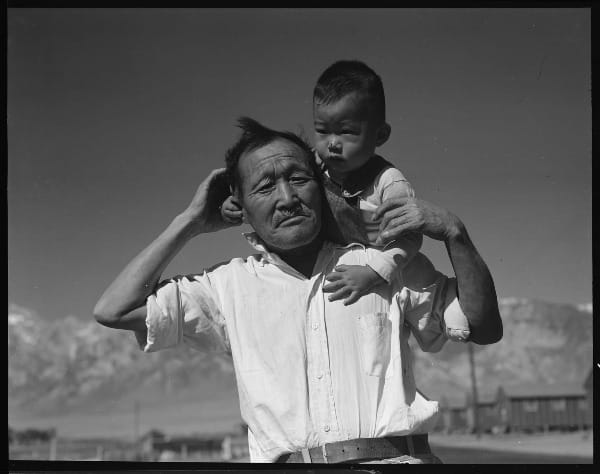
First grave at Manzanar for Matsunosuke Murakami, who died of heart disease in May, 1942. Photos from 1942 and 2025. (National Archives and author photo)
“One of the amazing things about America is the way it can both undermine you and keep you believing in your own possibilities, pumping you with hope,” Houston wrote near the end of Farewell to Manzanar.
I want America to stop undermining people, to stop making it hard for people to believe in their possibilities. The persistent habit of Americans targeting others is as important a throughline in American history as there is. And it’s shameful.
When the Secretary of the Interior ordered signs in national parks to celebrate greatness, he also forbade markers that might “inappropriately disparage” Americans. But when we name those who undermined others, who jailed others unjustly, we should disparage them. To disparage is “to lower in rank or reputation.” Many historical actors deserve and require disparagement.
Yet, the point isn’t to only disparage. Remember, as Houston did, that this nation keeps “pumping you with hope.” To permit only one part of the American story is childish; to understand it fully—the ugly and the beautiful—is to be an adult.
Comments ()