Scenically Yours
How national parks represent the nation
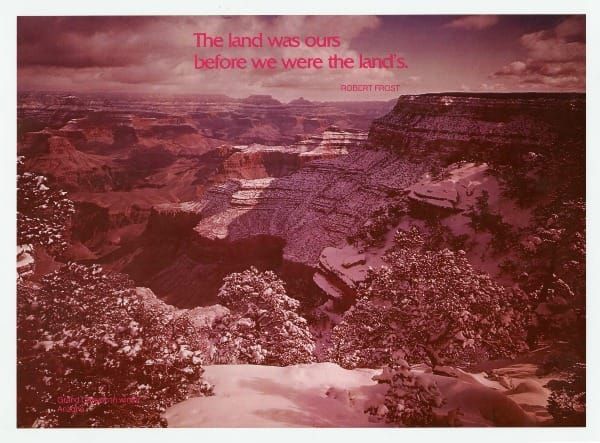
Imagine an assignment: Select three dozen photographs to showcase the United States to the world. It’s challenging to distill a nation’s essence into a small collection.
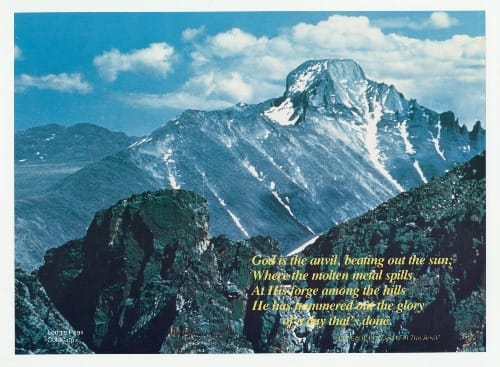
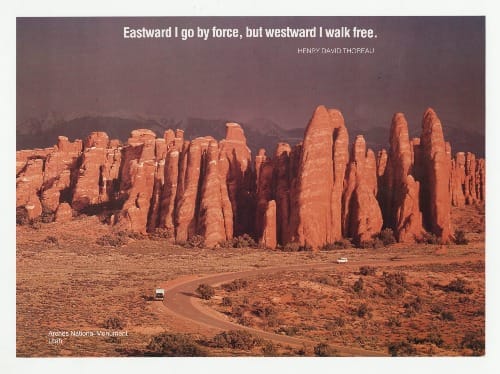
Some government worker or, more likely, a committee or committees of government workers faced this assignment in the early 1990s. Working for the United States Information Agency (USIA), they produced “Scenically Yours,” a group of photographs to be sent around the world for display in embassies and similar places to project American power and values. A large proportion of those images relied on nature, including national parks, in what is a long-standing practice of equating the beauty of the continent with the essence of the nation.
During the Cold War, the United States engaged the world through information as well as diplomacy and warfare. Laws including the Smith-Mundt Act of 1948 and the Fulbright-Hays Act of 1961 created the USIA and directed it to promote cultural understanding about the United States for international audiences—a propaganda arm of American diplomacy.
When the Cold War ended, the mission of the USIA evolved to promote business and market economics, as well as to tell the nation’s story to the world. It was during that early post-Cold War period that the USIA created “Scenically Yours.” These included about three dozen photos meant to represent the nation.
“Scenically Yours” is an eclectic collection. It includes a few city scenes, including City Hall in Philadelphia to promote democracy at local levels, a fountain and skyline of Jacksonville to represent thriving Sunbelt economies, and Ghirardelli Square in San Francisco to symbolize the lasting power of the past still evident in urban settings. The nation’s cities, “Scenically Yours” seemed to say, were thriving and beautiful, the envy of the world.
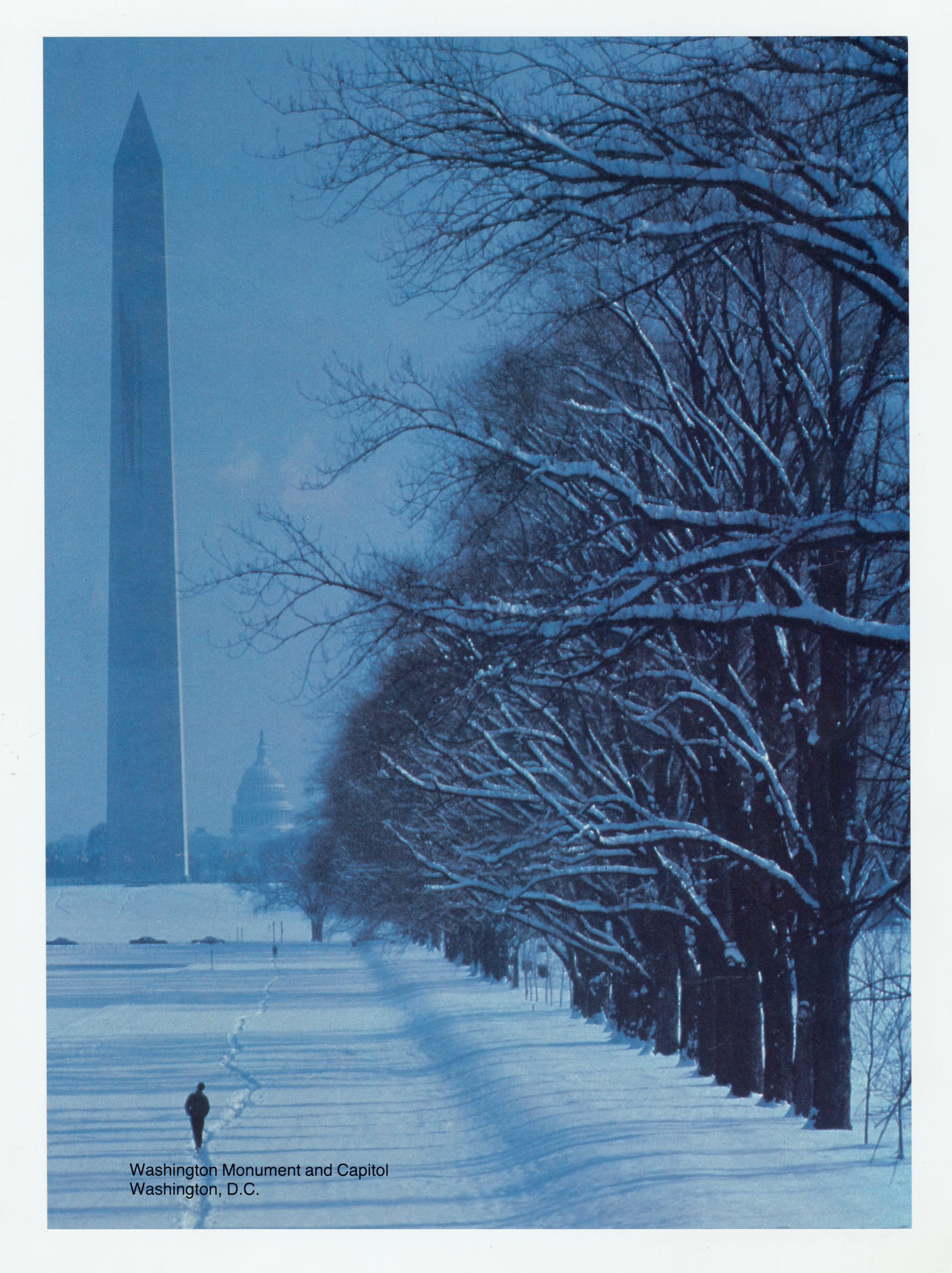
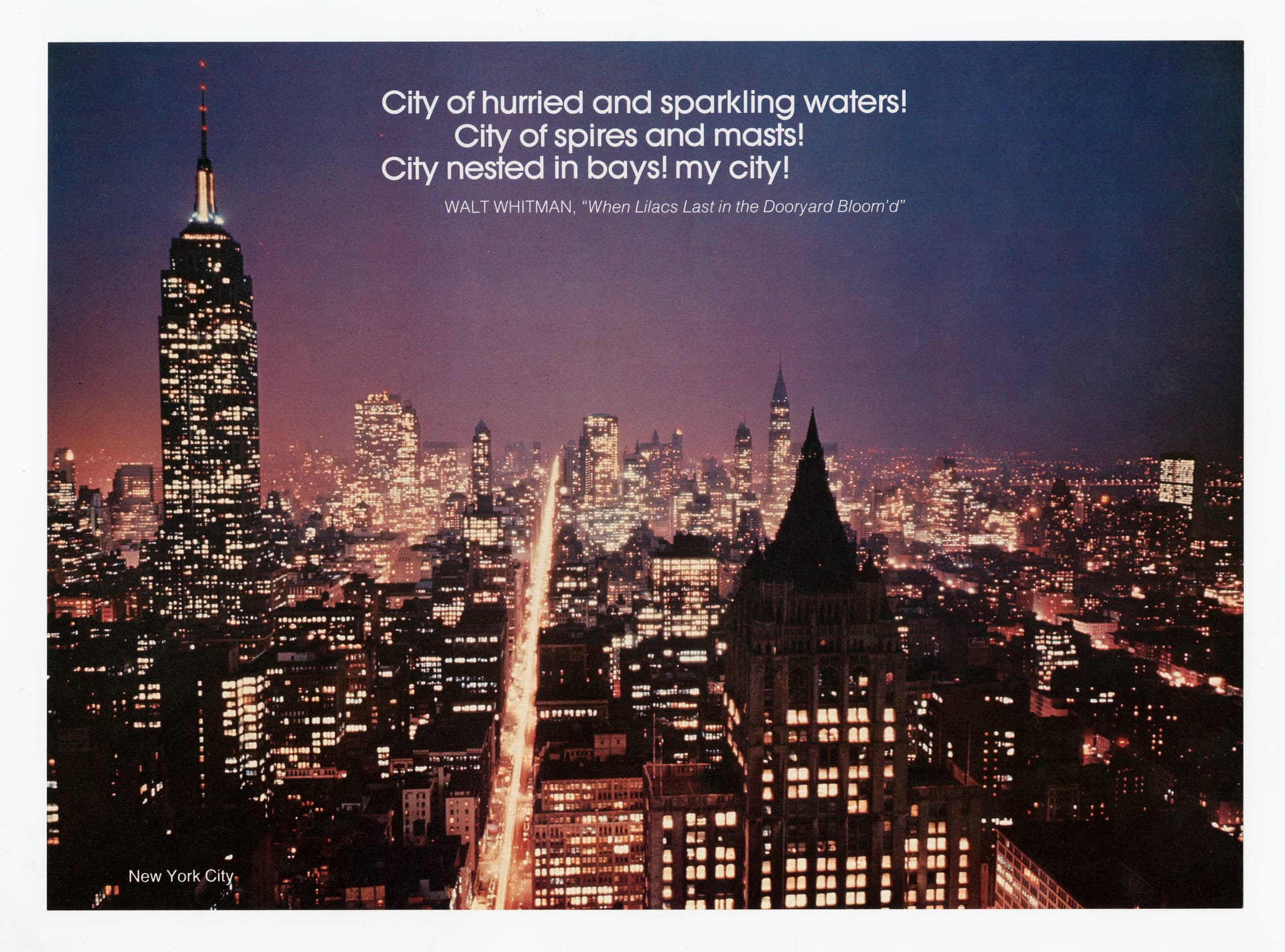
Washington, D.C., and New York City, "Scenically Yours." (National Archives)
Most of the images in “Scenically Yours,” however, put nature on display. This should not be a surprise.
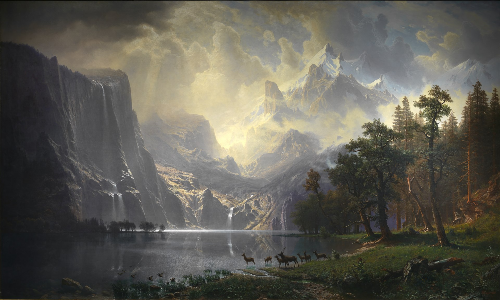
In the 19th century, Americans often felt culturally inferior to Europeans. To compensate, Americans touted the continent and its majestic landscapes. Europe may have cathedrals and a Coliseum, but there was no Yellowstone or Grand Canyon. Scenic nationalism walked hand in hand with the first national parks, and early landscape art by painters like Albert Bierstadt or photographers like William Henry Jackson captured nature’s nation in their work and helped create a culture that venerated such places.
By the early 20th century, this association between nature and nation only increased. A railroad brochure gave a name to the movement. “See Europe if You Will,” it read, “but See America First.” Visiting iconic American landscapes—seeing America first—became an act not only of tourism but also of pilgrimage and citizenship. This trend continued, something confirmed by the 1990’s Scenically Yours selections.
The photographs are not all wilderness scenes. You can find a hang glider in Idaho, a Cherokee dancer in Oklahoma, and a mission in New Mexico.
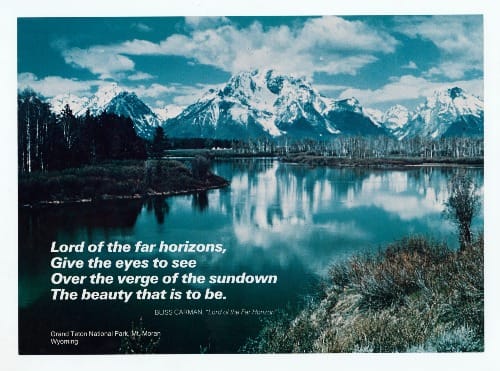
And not all the natural scenes are in national parks, but around one-third of the entire collection are from national parks. This is a remarkable over-representation. National parks are only about 3% of the United States landmass. That the USIA chose so many national parks to project an image of the nation abroad demonstrates that national parks are not just exceptional places, but representative ones. That is, they are something fundamental to how the nation sees itself.
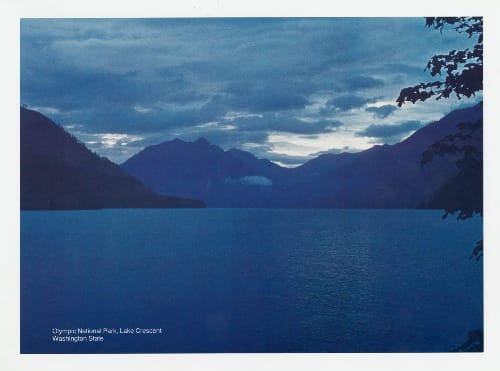
Today, on Earth Day, we might look at these images and ponder their meaning. We might consider what they reveal and obscure. We could celebrate the national parks and recognize that, despite the flawless images, they are no more perfect than our democracy is. And then pledge to defend both.
Comments ()