The Mythic Nature of Yellowstone
Nathaniel Pitt Langford and the making of wonders
Students of Yellowstone National Park have heard about the campfire myth.
During one of the earliest expeditions to Yellowstone in 1870, travelers were making their way back to Montana. As they sat around the campfire near where the Firehole and Gibbon Rivers converged to form the Madison River, the men mused about taking up claims around the most astounding “points of interest” in the landscape that they had seen over the previous month. They might profit from tourists who they expected to rush to the scene once word reached American towns and cities.
Then, Cornelius Hedges, a U.S. District Attorney for Montana, dissented. “There ought to be no private ownership of any portion of that region,” Hedges said, “but that the whole of it ought to be set apart as a great National Park.” The men around the campfire instantly agreed and pledged to “untiring work and concerted action” to make it so.
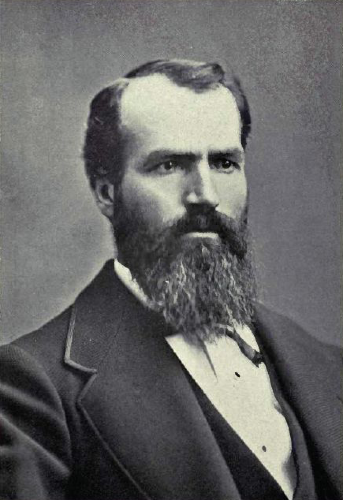
This is the story Nathaniel Pitt Langford told in his Diary of the Washburn Expedition to the Yellowstone and Firehole Rivers in the Year 1870 (1905). However, Langford, who had arranged a lecture series with Northern Pacific Railroad support before heading into the Yellowstone wilderness, published this account more than three decades after the fact and included certain embellishments. No fewer than seventeen accounts of the expedition had appeared before this published diary, and none of them included this seemingly significant event.
The year after the expedition, Langford published a two-part article in Scribner’s Monthly, a new magazine that aimed to celebrate America for the middle class. “The Wonders of the Yellowstone” became the first widely available account of this country. Langford had succeeded where an 1869 expedition had failed; Eastern editors dismissed their accounts as fantasy.
As Langford’s party moved into Yellowstone, the landscape confused them. They called an eroded rock tower a “marvelous freak of the elements,” a mild rebuke of nature.
After climbing (and naming) Mount Washburn, they continued across “volcanic ashes” when “we suddenly came upon a hideous-looking glen filled with the sulphurous vapor emitted from six or eight boiling springs of great size and activity. One of our company aptly compared it to the entrance to the infernal regions,” Langford wrote. It smelled so bad, they worried about “possible suffocation.”
Landmarks showed an obsession with the underworld: Devil’s Slide, Fire Hole Prairie, Devil’s Glen, Hell Roaring River, Valley of Desolation.
Even when Langford wasn’t comparing what the party saw to hell, his language evoked an uninviting place. Rivers moved at “fearful” rates and with “frightful velocity, through a gloomy gorge” where water crashed with “great fury.” Geysers were “violent;” springs appeared desolate or “disgusting;” canyons were “horrid.” The silence was oppressive, the stillness “horrible.”
The portrait Langford drew staggered under the weight of negativity, tacking toward an uncertain bearing.
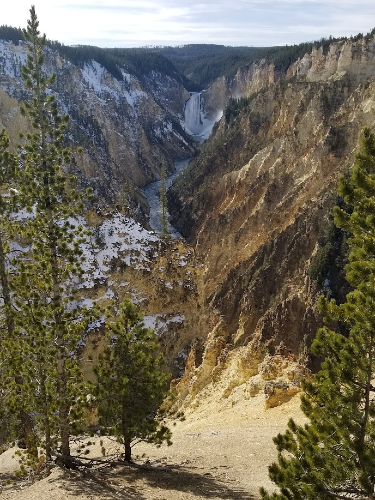
The Grand Canyon of the Yellowstone was particularly perplexing. To read Langford’s account is to witness a man struggling to comprehend his surroundings. The “brain reels,” he wrote, as he looked into the canyon toward “dark gray rocks . . . in dismal shadow.” Being unable to see into the canyon unnerved Langford, and his inability to hear the rushing river below disturbed him. And yet . . .
Langford confessed that the Lower Falls presented a “grander scene” than any “mortal” had ever seen, and the cataract seemed “adapted to all the harmonies of the surrounding scenery.” The quiet canyon contrasted with the boisterous falls, a juxtaposition that impressed him:
There all was darkness, gloom, and shadow; here all was vivacity, gayety, and delight. One was the most unsocial, the other the most social scene in nature. We could talk, and sing, and whoop, waking the echoes with our mirth and laughter in presence of the falls, but we could not thus profane the silence of the cañon.
The party did not know how to behave in such a place. After two days of observing, measuring, marveling, the party left: “The sun shone brightly, and the laughing waters of the upper fall were filled with the glitter of rainbows and diamonds. Nature, in the excess of her prodigality, had seemingly determined that this last look should be the brightest, for there was everything in the landscape, illuminated by the rising sun, to invite a longer stay.”
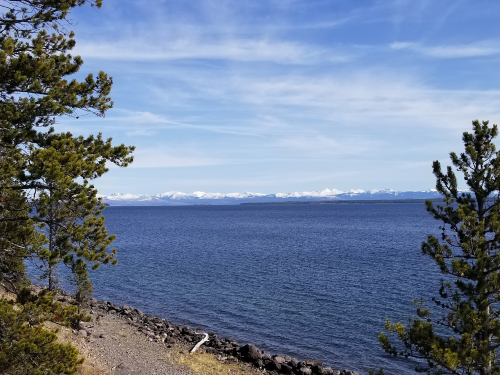
The expedition found Yellowstone Lake particularly striking—“one of the most attractive natural objects in the world” where water had “never seemed so beautiful before.”
But traveling was hard. At times, Langford noted, “our tempers frequently displayed alarming activity, not only towards the patient creatures laden with our stores, but towards each other.” And then Truman Everts, one of the party, got lost. After days of searching, they headed toward home with reluctance. (Everts eventually emerged from Yellowstone after 37 difficult days—and wrote his own Scribner’s Monthly article, “Thirty-Seven Days of Peril,” in November 1871.)
The expedition believed it had passed its climax:
We had seen the greatest wonders on the continent, and were convinced that there was not on the globe another region where, within the same limits, nature had crowded so much of grandeur and majesty, with so much of novelty and wonder.
Then the party stumbled into the Upper Geyser Basin where they found Old Faithful and the many colorful springs and other geysers nearby. They kept finding the wonders of the Yellowstone.
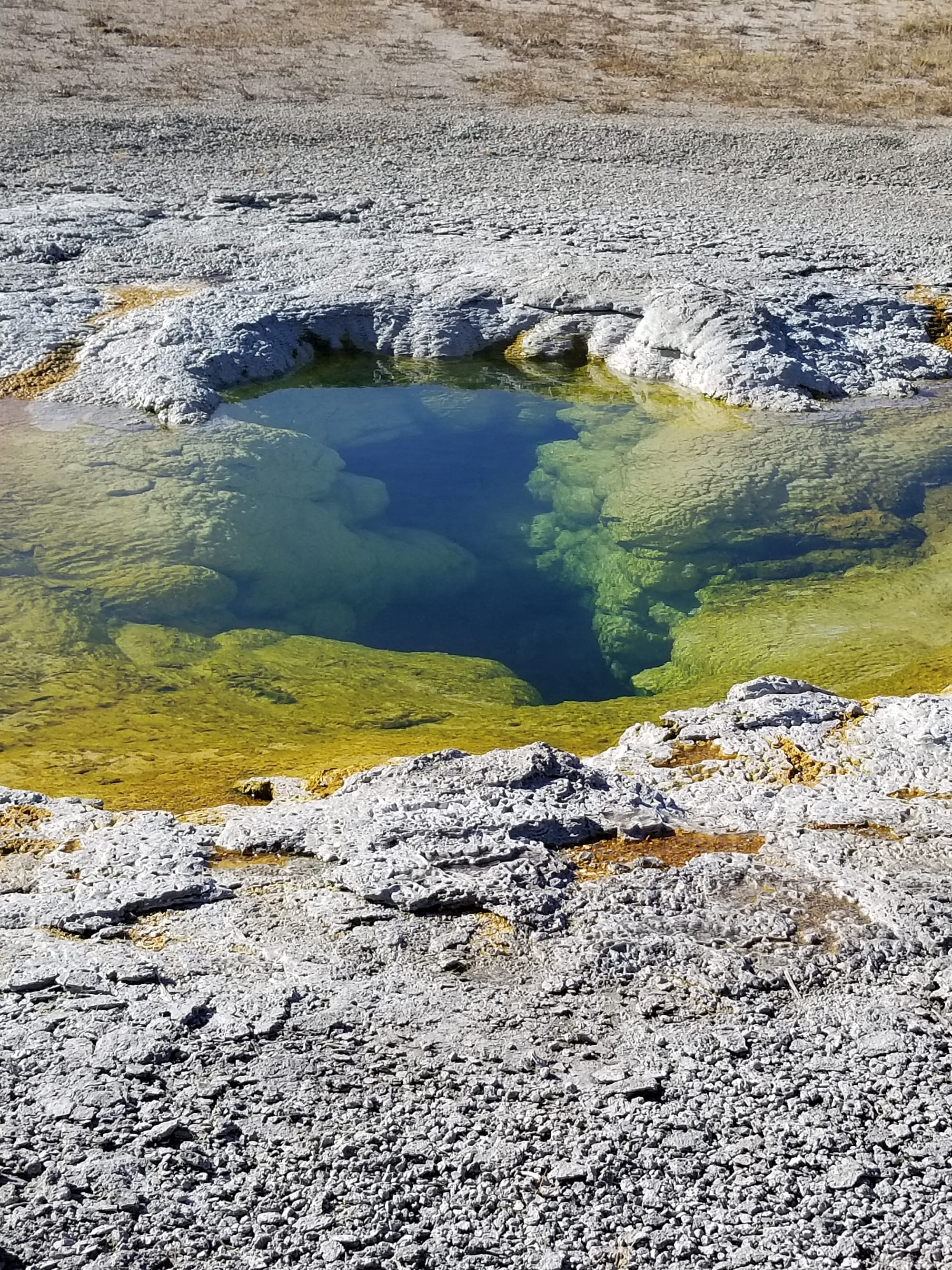
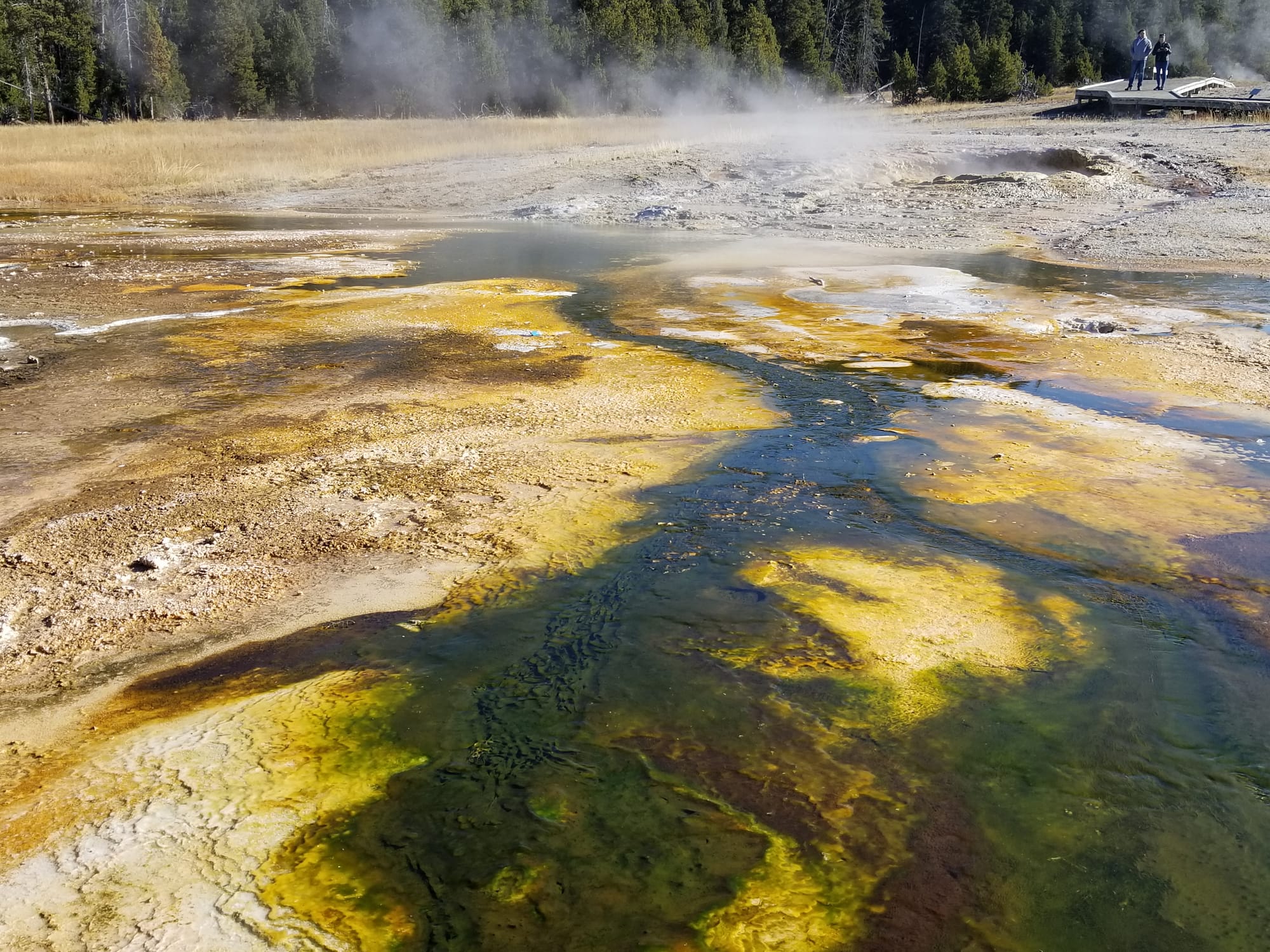
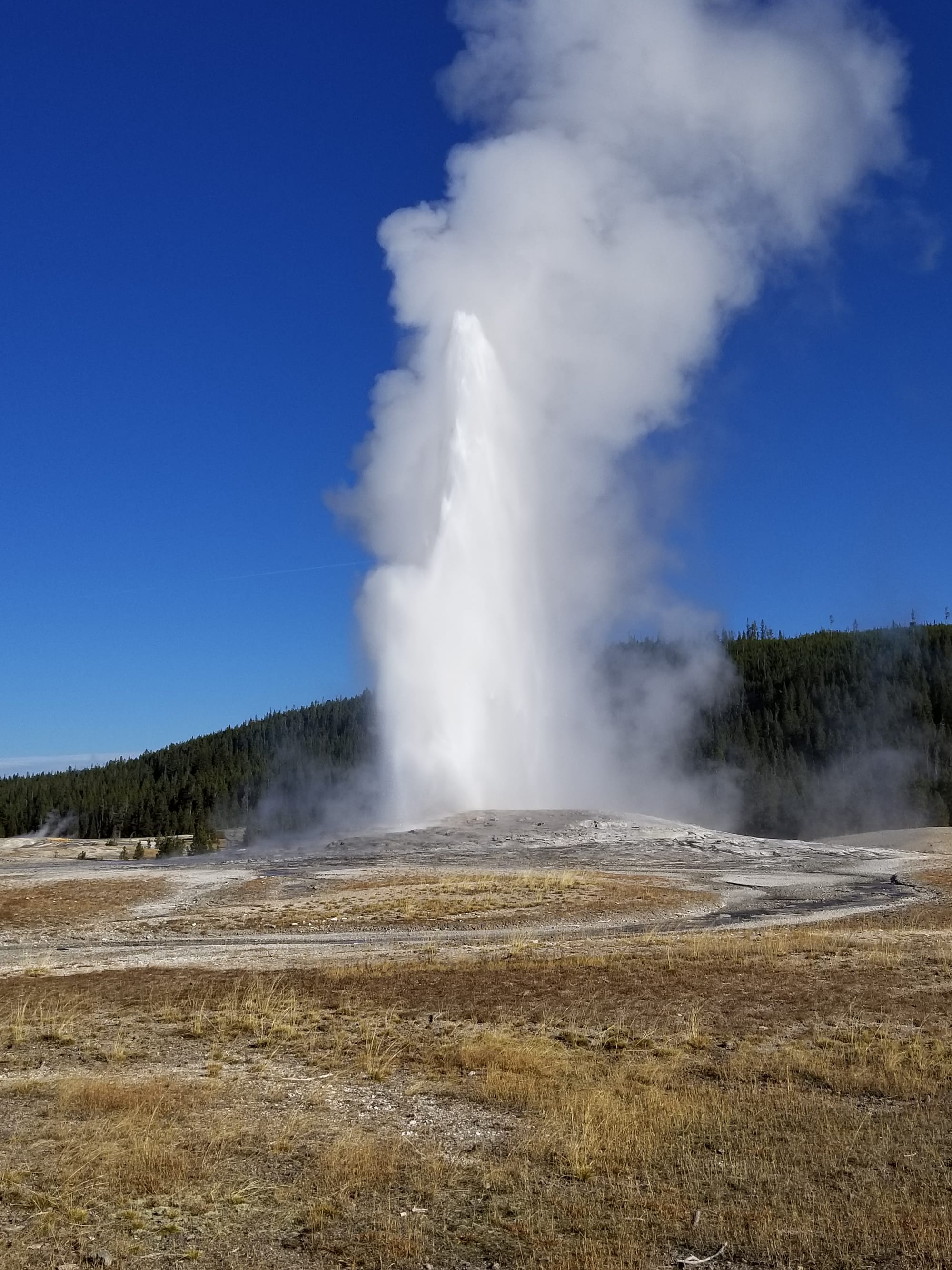
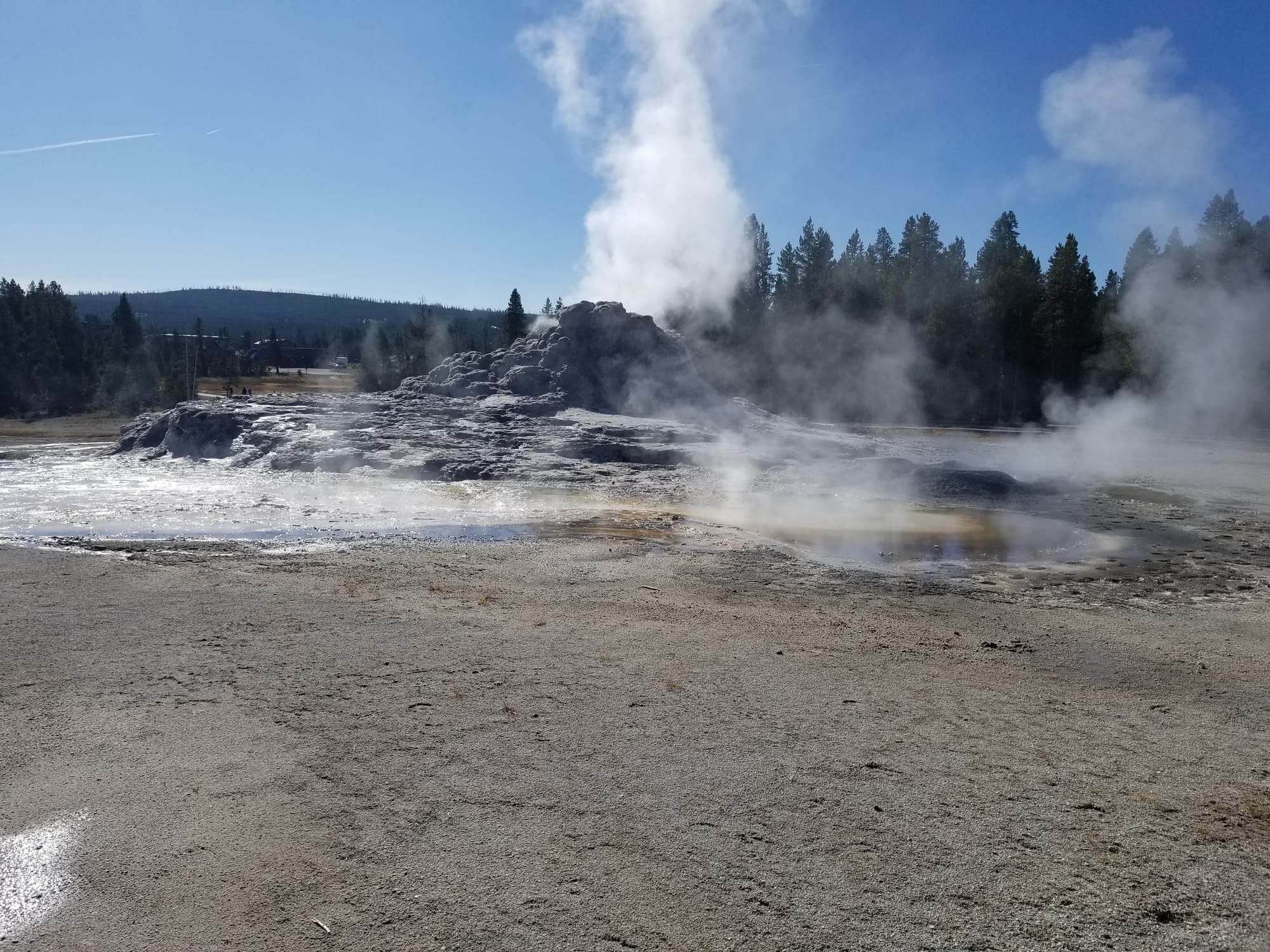
Features in the Upper Geyser Basin, October 2019. (author photos)
In his Scribner’s Monthly article, Langford mentioned nothing about a park. Instead, he presented various scientific theories about volcanic activity, even invoking Humboldt.
But in his final paragraph, Langford dropped a revealing clue. The Northern Pacific Railroad, he said, would soon arrive. (Langford said three years, but it didn’t reach Livingston until 1882.) When the trains made it easy, tourists would “behold with their own eyes the wonders” Langford had shared. He did not disclose then that before the expedition, Langford had contracted with the railroad to give lectures in the East about Yellowstone. In these lectures, he would tell of a mythic place out West “grand in extent, wonderful in variety, in a climate favored of Heaven, and amid scenery the most stupendous on the continent.”
Cross-Words
Past Taking Bearings essays that are complementary to this week's include:
 Adam M. Sowards
 Adam M. Sowards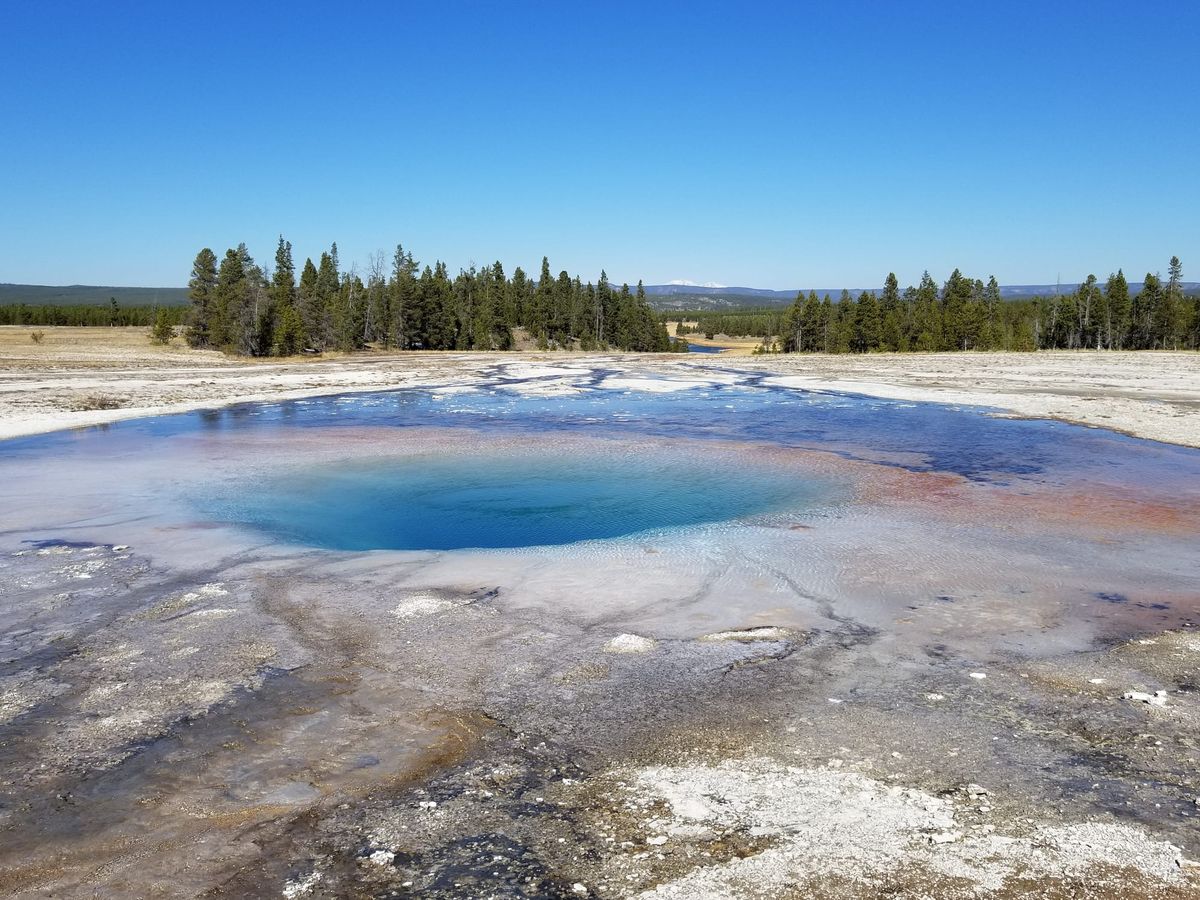
Besides the Scribner's Monthly article available through the Internet Archive, I relied on the following sources this week: Megan Kate Nelson, Saving Yellowstone: Exploration and Preservation in Reconstruction America (2022); John Clayton, Wonderlandscape: Yellowstone National Park and the Evolution of an American Cultural Icon (2017); Roderick Frazier Nash, Wilderness and the American Mind, 5th ed. (2014); and Alfred Runte, National Parks The American Experience, 4th ed. (2010).
Comments ()