Unconfined in the Desert
Reflecting on the Mojave National Preserve
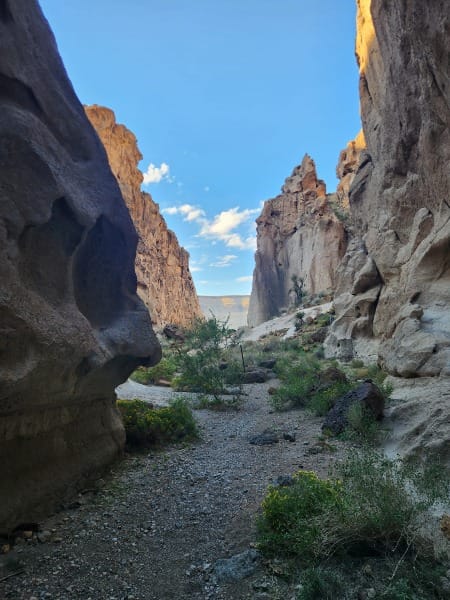
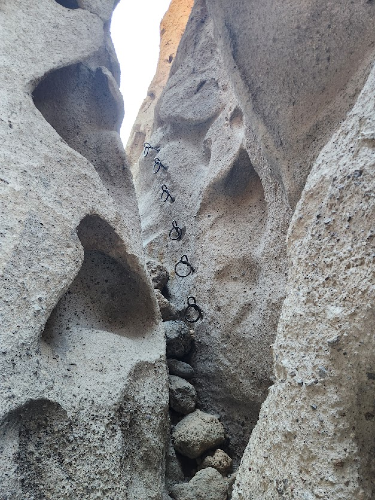
I’d reached the end of the trail. Not the actual end. The trail was a loop, but it required navigating a narrow gap in the rocks using iron rings stuck into the stone walls. Easy enough but my dog accompanied me, and his sense of adventure lacks even more than mine. He refused to go further when the trail met boulders and the walls pressed in. Leaving him for a minute, I climbed through the gap enough to see the way ahead. The fit was tight but easily manageable. Then I retreated.
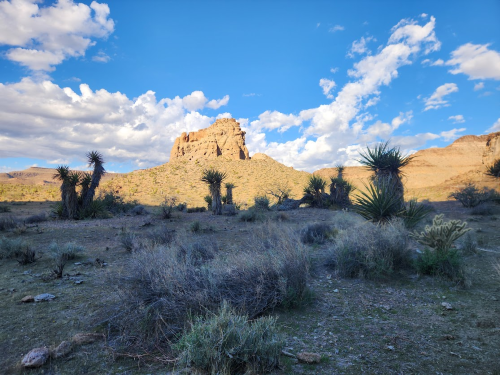
Before starting back, we stood in the shadows a moment, looking southwest from this walled-in pocket. The tan rocks rose high; the desert scrub and yucca broke up the Mojave Desert floor along the edges where gravel yielded to stone. The morning light hit the rocks at the edge and a mesa in the distance, beckoning with its warm visibility. This gap where we stood, the Hole-in-the-Wall, felt intimate, either embracing or confining, depending on your desert mood.
No such question—embrace or confinement—was hinted at the day before in Kelso where the National Park Service displayed the old jail as part of its Mojave National Preserve interpretations. Old photos show the two-room jail wrapped in corrugated tin. But now, it sits on the gravel, exposed. The strap-steel cage held the drunk and the unruly from the mid-1940s to the mid-1980s when the Union Pacific closed the elegant Kelso Depot, now a visitor center for the National Park Service.
Bared to the desert sun, the jail calls to mind an unimaginable torture for the miners and railroad employees who most often found themselves there, miles and miles from anyone else. The tin would have provided shade, but as a wall, it would have blocked the moving air. It must have been a suffocating experience.
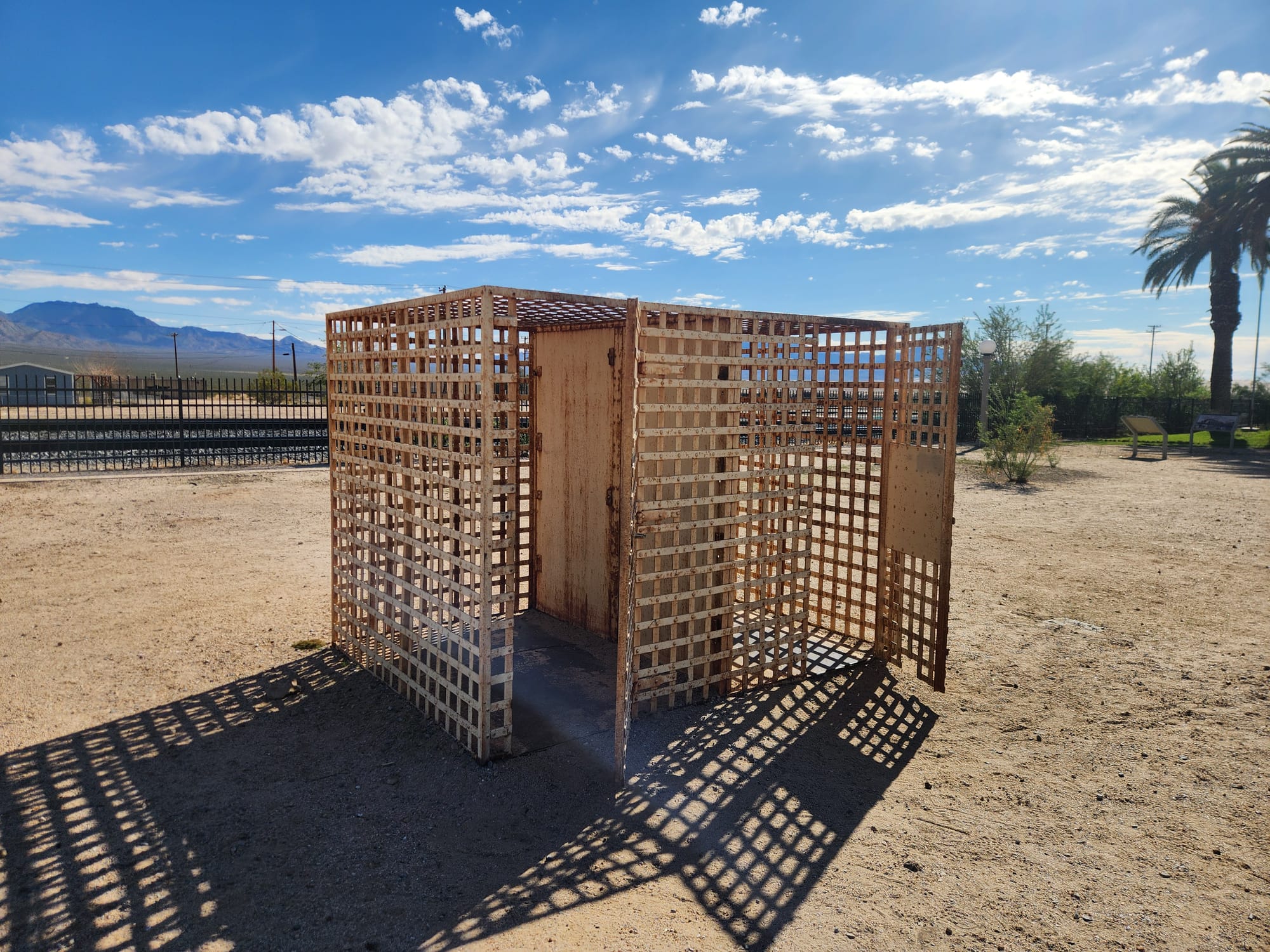
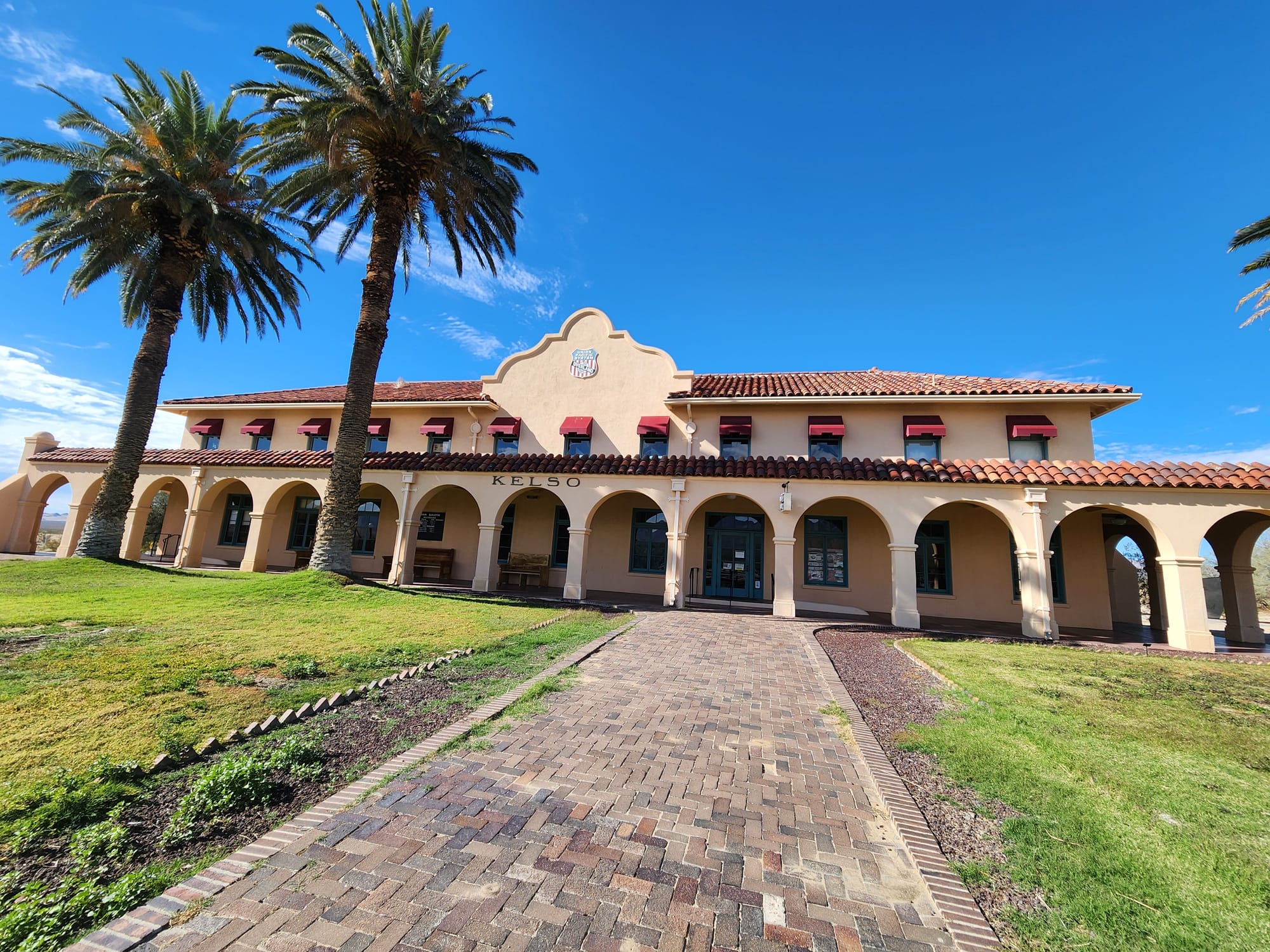
Kelso jail and Kelso Depot, Mojave National Preserve, October 2025. (author photos)
That is not the quality most common to wild places or lands protected by the National Park Service. In fact, one of the characteristics defined in the Wilderness Act is opportunities for an “unconfined type of recreation.”
The law famously used “untrammeled,” a word often misunderstood and even written as “untrampled.” Look it up and you’ll find that “untrammeled” means “not confined, limited, or impeded.” I used to tell students it meant not bound up. Free, in other words. What a curious word to describe wild places—and much better than the inaccurate words often carelessly used, such as untouched or pristine. (I’ve mused on the word before.)
Americans were slow to embrace the desert as a landscape worthy of preservation. Geysers and canyons and mountains were one thing; dry expanses with prickly plant life and poisonous creatures were another. The National Park Service existed for a generation before it started protect desert spaces, and the American public did not really change their attitudes until after World War II. For most of the nation’s history, “desert” meant desolation.
I fight this feeling myself, having grown up in the green, temperate Pacific Northwest. My visits to the Mojave Desert have always challenged my inclination to find something in a landscape to admire. The bleakest landscape I recall ever seeing is a stretch of northwestern Arizona, at the Mojave’s edge.
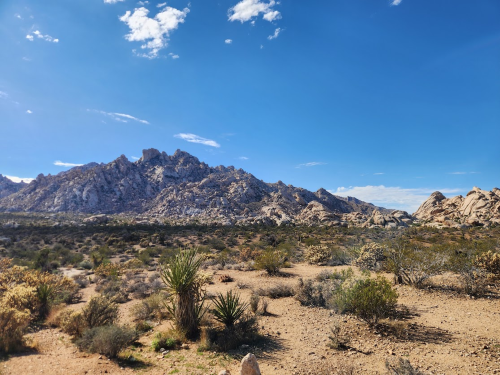
Despite my previous lack of enthusiasm for this desert, I headed to the Mojave National Preserve as the near-terminus of my California national park loop last fall. Death Valley hadn’t thrilled me, but almost as soon as I entered the Mojave National Preserve, I found the landscape more pleasing. Some mixture of the horizon, the plant life (which seemed abundant compared with Death Valley), and the isolation made this part of the Mojave feel welcoming. Between the interstate and Kelso, the first stop on the road after nearly 40 miles, I passed a single car coming my direction.
Recent flooding had washed sand into the road at every dip; signs directed me to be careful. Other road signs encouraged me to drive like a tortoise, complete with a tortoise image, an effort to raise awareness about the threatened Mojave desert tortoise.
The Joshua trees, the desert scrub, the distant mountains, the wide valleys, the rolling sand dunes—I passed through all these desert places with almost no obvious sign of people other than the road and, later, Kelso and then a mine. In other words, untrammeled.
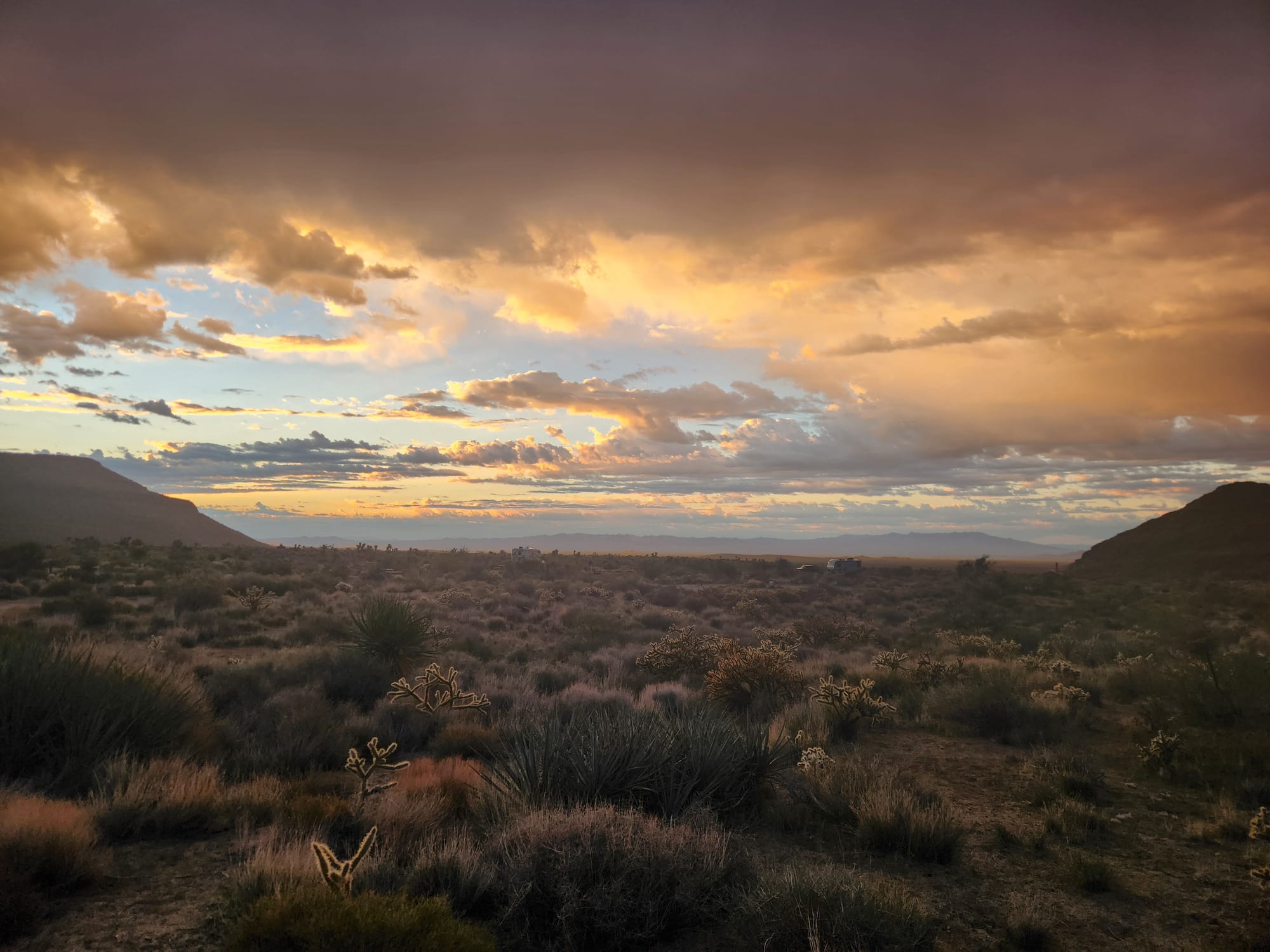
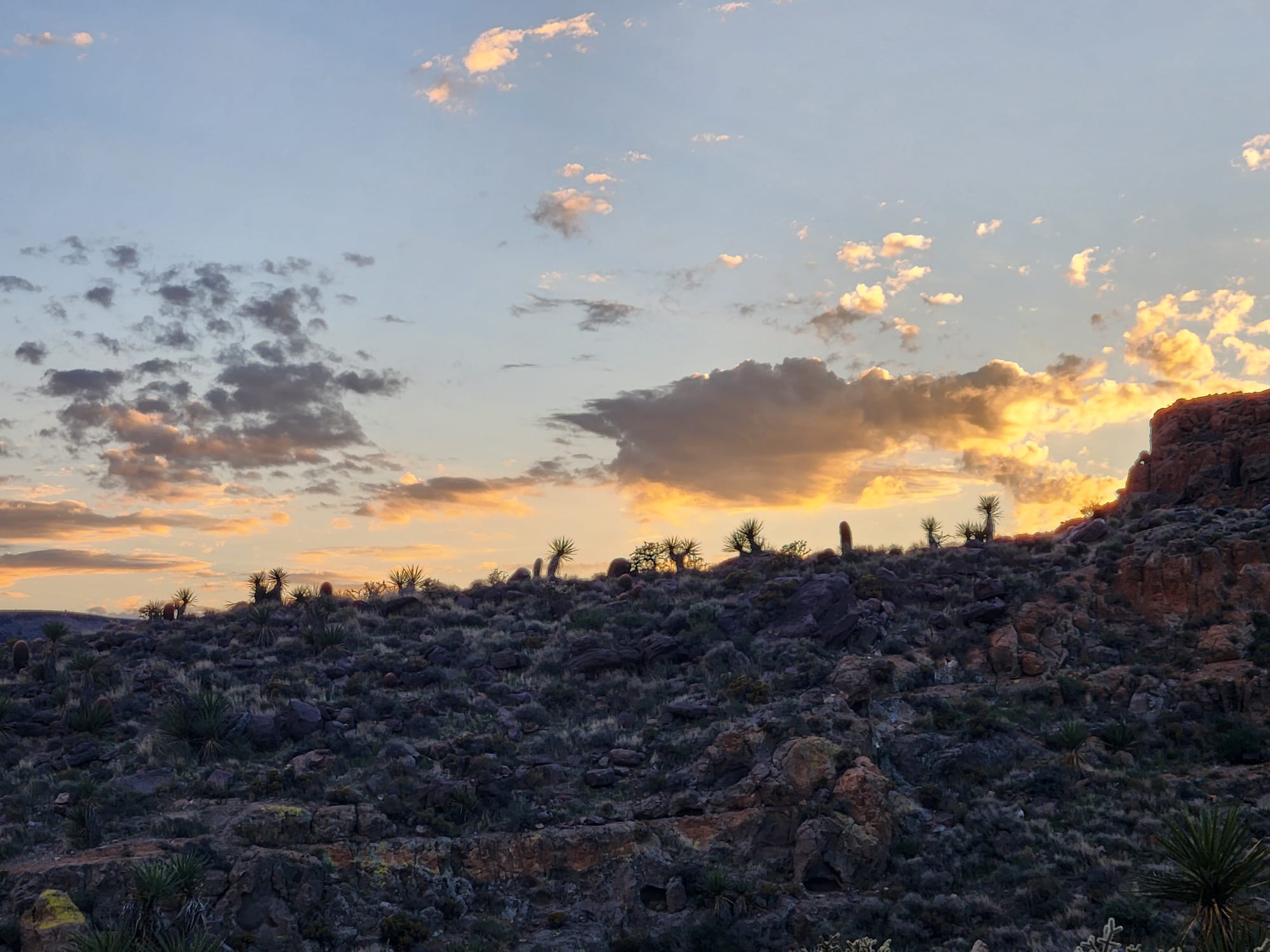
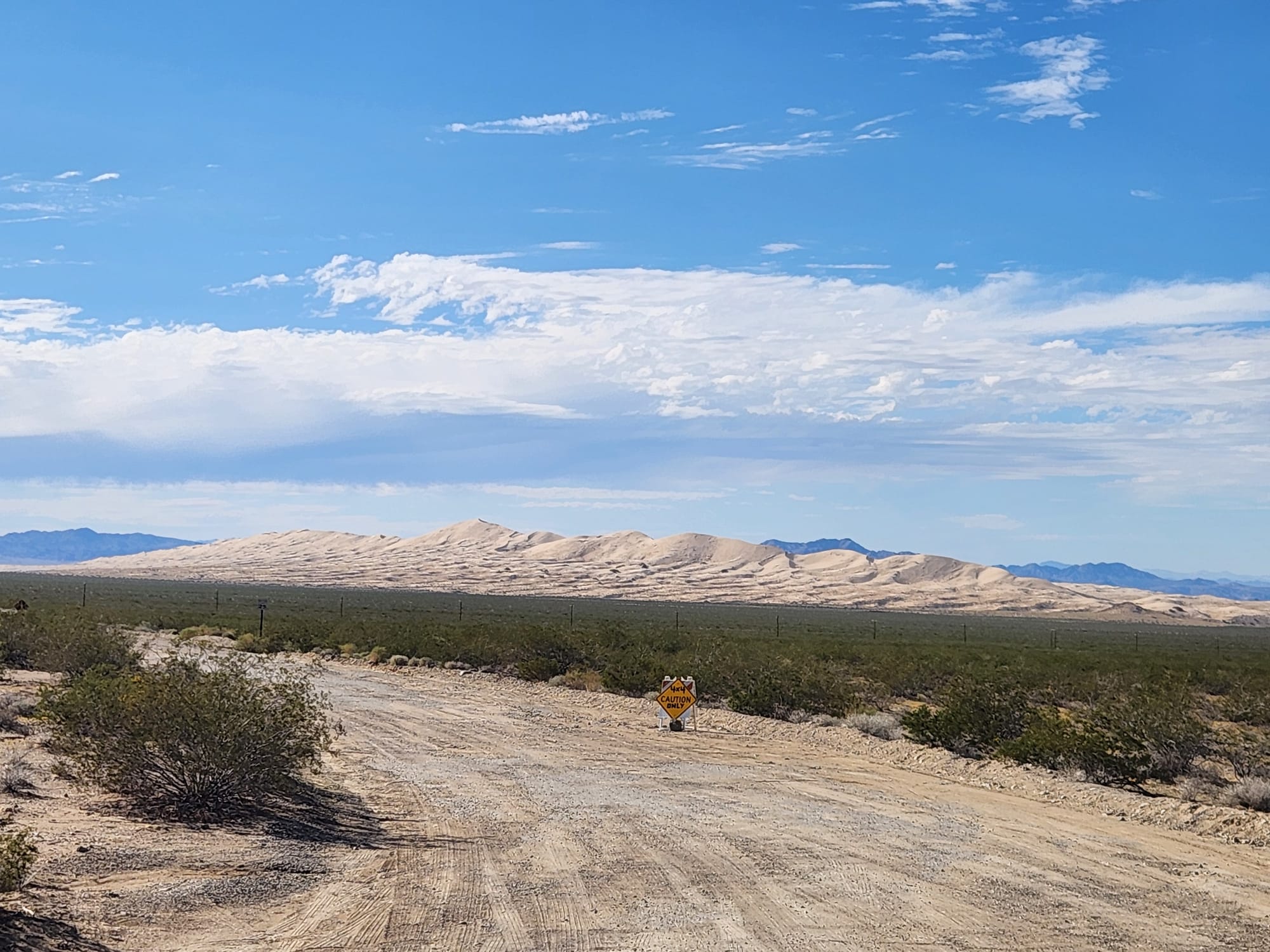
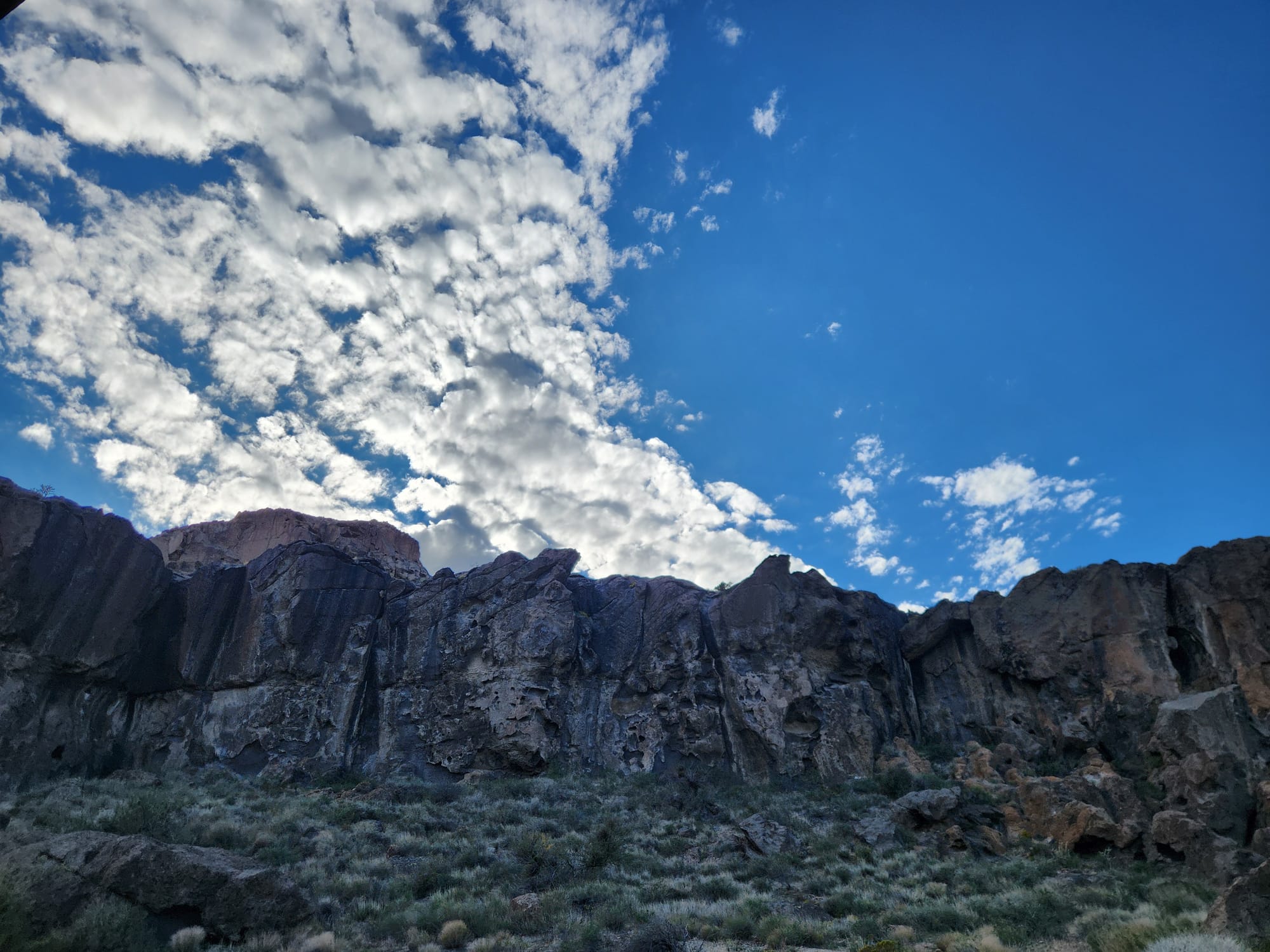
Scenes from the Mojave National Preserve, October 2025. (author photos)
This is by design but a relatively recent development. The Bureau of Land Management designated much of this area as the East Mojave National Scenic Area in 1981, the first such designation anywhere. Later in the 1980s, broad coalitions in both the public and in Congress worked to protect large parts of the region, ultimately successful in the California Desert Protection Act of 1994, guided by Senator Dianne Feinstein. The law upgraded Joshua Tree and Death Valley from national monuments to national parks and designated 69 wilderness areas to the National Wilderness Preservation System. And it pulled the scenic area out of the BLM and put the NPS in charge.
During the campaign, environmentalists wanted to create a Mojave National Park, but the Wise Use Movement and the National Rifle Association demanded the right to hunt, something rarely allowed in national parks. To sidestep the issue, Congress created a “national preserve” instead, where hunting is permitted.
Congress made the case that between Death Valley National Park and Joshua Tree National Park, the Mojave includes “particular ecosystems and transitional desert type[s]” that were not represented in those parks and thus deserved some protection. This seems right to me. I was traveling from one national park to the next and preferred the distinct landscape of the national preserve in between.
The quiet, the light, the diversity of life somehow felt balanced, unique, right.
Big legislation like the CDPA does not pass without important compromises. Almost half of the Mojave preserve had been designated wilderness, but across the entire area, other uses were allowed.
Besides hunting, the national preserve allowed the continued privilege of grazing “at no more than the current level.” Mining, of course, would be permitted under existing claims and the Interior department would investigate the validity of claims, following the Mining in the Parks Act (discussed here). Uprooting established economic activity and property rights has always been a rare occurrence, so these compromises were to be expected. Off-road vehicle use is permitted in some places, and military flights were allowed to zip over the preserve.
The CDPA also guaranteed access to the NPS units for Native Americans “for traditional cultural and religious purposes,” a principle that had been established about a decade and a half before with the American Indian Religious Freedom Act (1978).
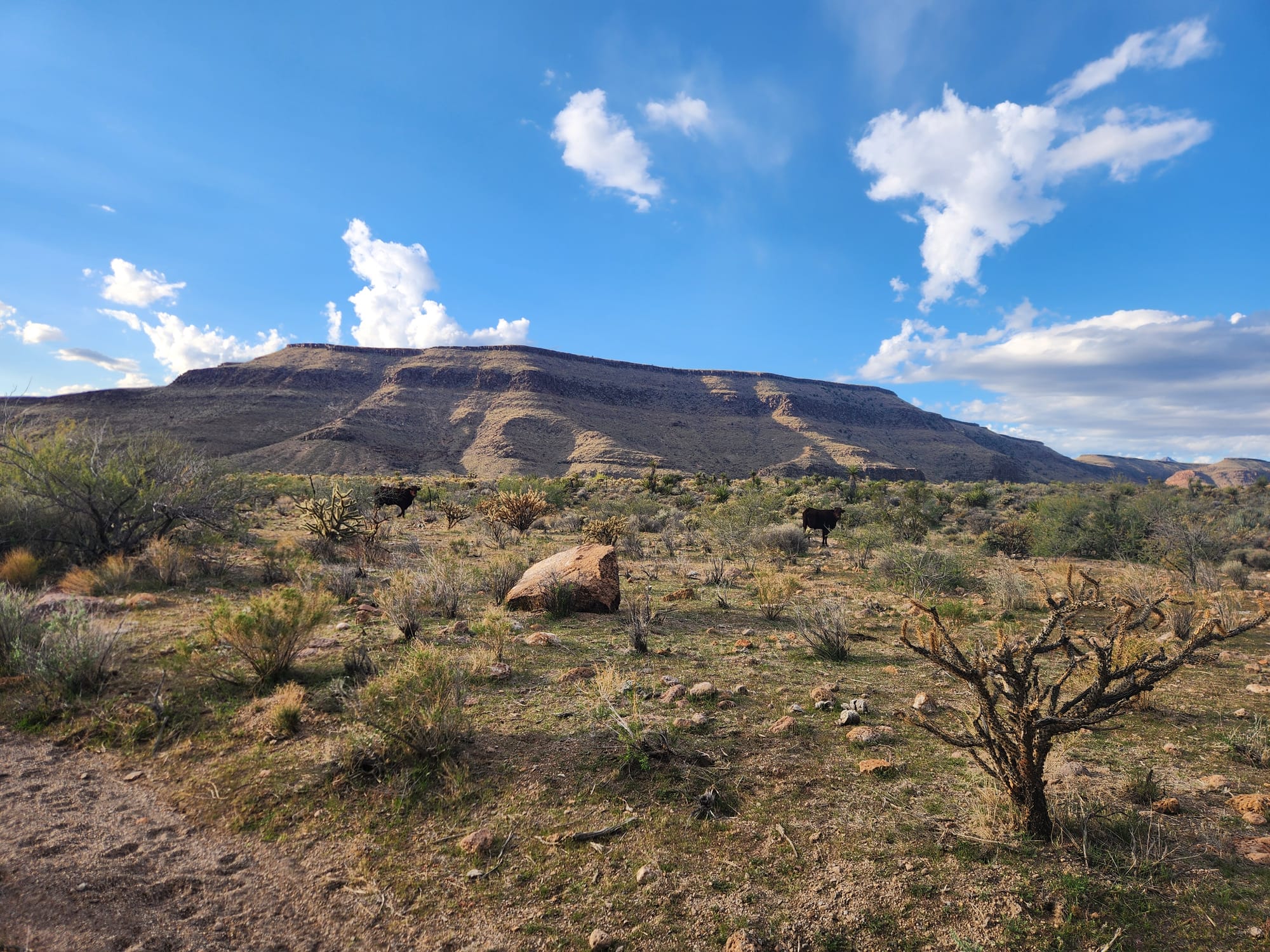
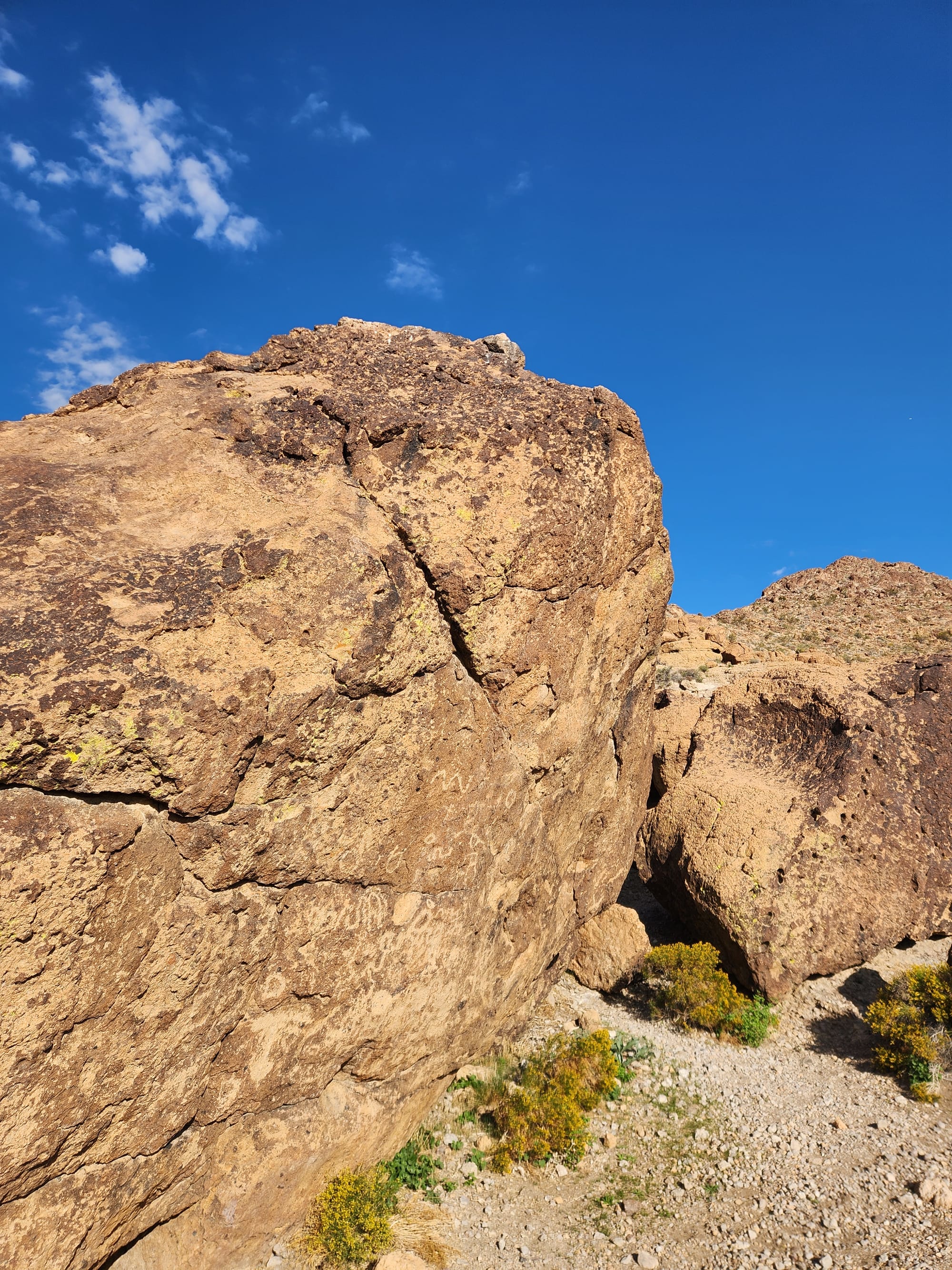
The transient (cattle) and the permanent (petroglyphs) in the Mojave National Preserve, October 2025. (author photos)
As my dog and I turned around and headed back, none of these compromises were on my mind, but evidence of them lay all around us. We walked carefully not to spook the cattle grazing out on the flats and picked our path carefully through the cow pies left behind. After squeezing through the fence that kept the cattle in (or out), we could see the modest ranch headquarters that commanded a good view of the lowlands between mesas below the white-clouded sky.
As the trail curved at its southeastern edge, petroglyphs lit up in the morning sun like billboards. The stories and people they evoked reminded me that landscapes hold traditions older than I can conceive, longer than any type of law. They are a deep presence that mock legislative compromise.
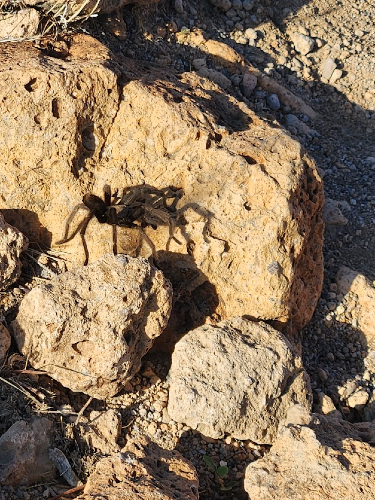
We watched our step, because the trail included rocks that could roll an ankle. And then, a shadow caught my eye. A tarantula crawled its way among the stones, unconfined.
In Other Words
I have not shared other writing in a while. Here is a story I wrote about the December floods where I live.
 Bryony Angell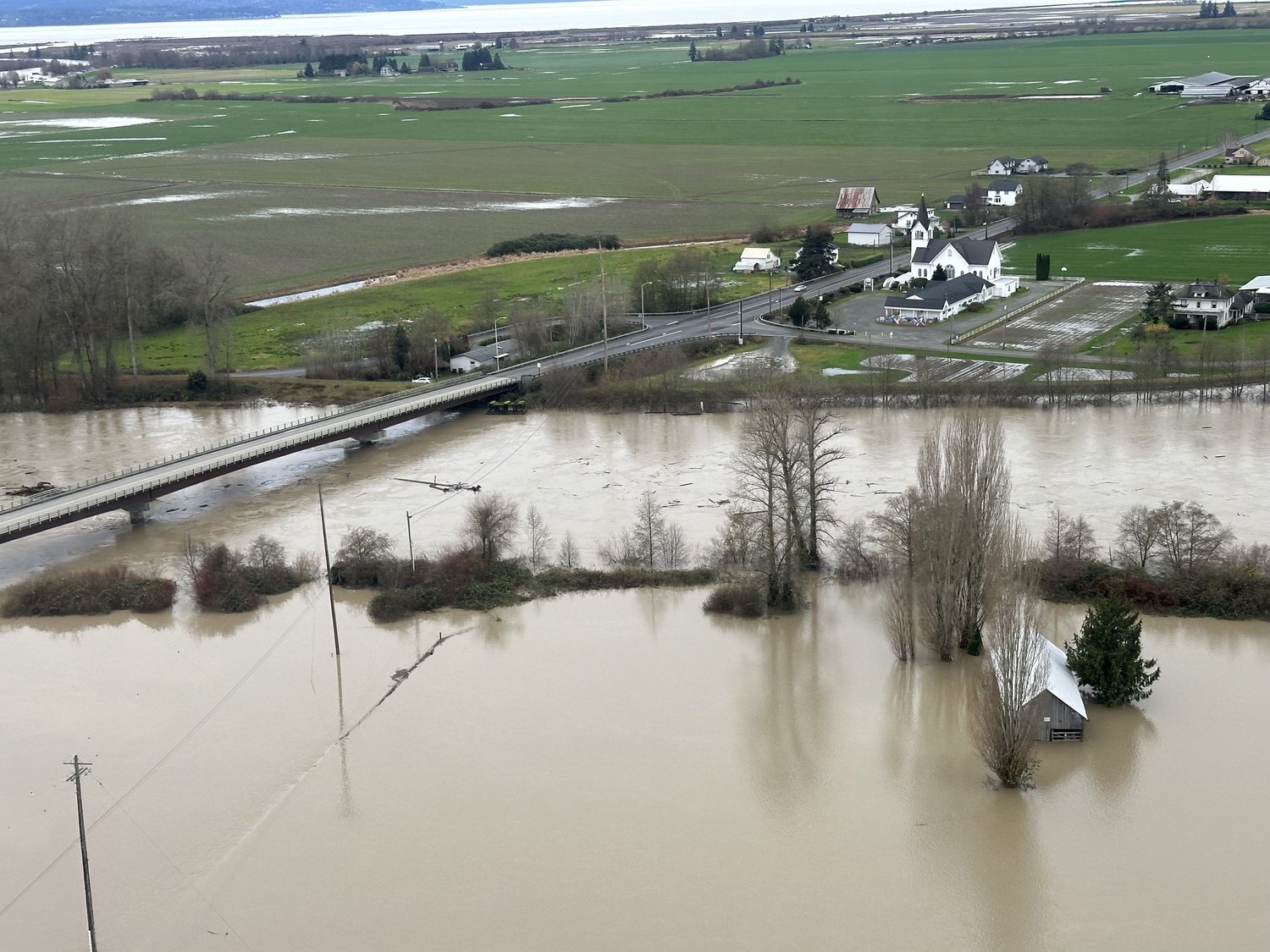
Comments ()