Grateful It's There
Some brief thoughts about Bears Ears
A common conservationist logic goes something like this: We save what we love; we love what we know; so, we must do everything possible to get more people to know firsthand more threatened landscapes.
It’s a sound logic.
It can also be limiting. Many of us form strong attachments without having been to a place or knowing it intimately.
As the irascible writer and activist Edward Abbey put it this way in Desert Solitaire:
A man could be a lover and defender of the wilderness without ever in his lifetime leaving the boundaries of asphalt, powerlines, and right-angled surfaces. We need wilderness whether or not we ever set foot in it. We need a refuge even though we may never need to go there. I may never in my life get to Alaska, for example, but I am grateful that it’s there. We need the possibility of escape as surely as we need hope.
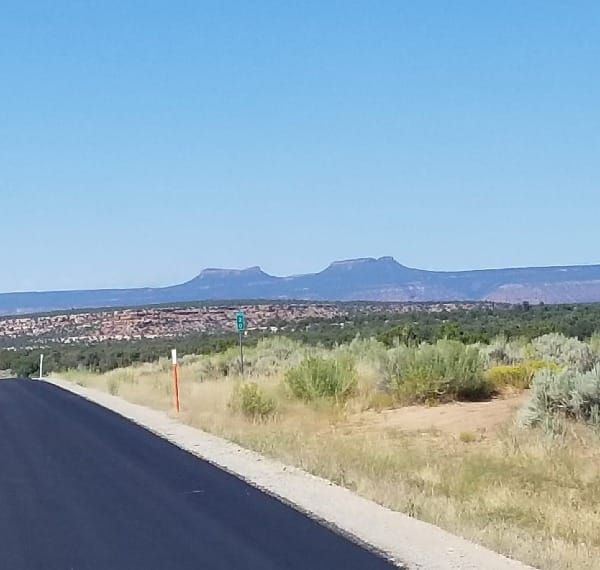
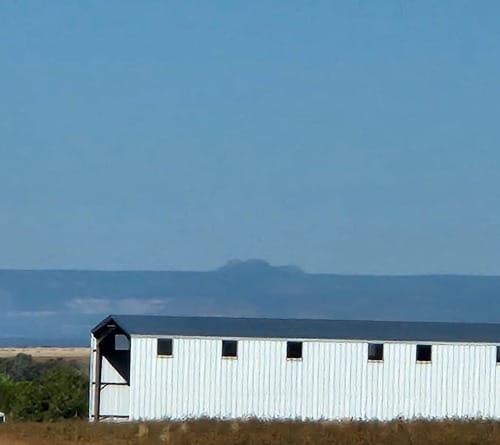
I’m not sure “escape” is what we most need (for more on this, see Amy Irvine's wonderful Desert Cabal), but Abbey’s larger point holds for me. I know few wildernesses well, and the one whose fate gladdens and maddens me perhaps the most is one I’ve only glimpsed from a distance twice: Bears Ears.
Deserts aren’t my favorite environment; I do not get to Southern Utah often. However, I’ve tracked Bears Ears’ political rise and fall with more interest than I have in most endangered places. I have wanted to see it as an object lesson in conservation’s positive evolution, yet I fear the outcome is not the rising trend I have hoped for.
Here is a quick version of the story: A coalition of Southwestern tribes asked the federal government to protect their homeland, which includes thousands upon thousands of artifacts in a landscape central to their cultural practices and contemporary lives. Congress dallied and proposed a weak plan that emphasized energy development and ranching that was obviously—even deliberately—unworkable. Instead, President Obama created Bears Ears National Monument. President Trump shrunk that monument by 85 percent. President Biden restored it. President Trump shrunk it again, this time by 90 percent—and dissolved the Bears Ears Commission, which had been established to guide and recommend management of the monument. The administration said last week that there is “no obligation to engage, consult, or coordinate” with tribes as co-managers anymore.
I am not going to write about all the details of what happened recently or why. I have writer friends who have done that and have called out lies about the nature of the monuments and analyzed the new maps. They are closer to the ground, and I have nothing to add to their reporting.
But as a historian of the West and, especially, of public lands, I have found in the last decade that the Bears Ears story is illuminating in the ways that are both typical and atypical. It is a typical story of a predictable breakdown between a large number of conservationists and environmentalists favoring federal action and protection of a beautiful and special place and a minority of political conservatives and industry who favor policies that prioritize extracting profit and “local control”—which has commonly been a code word for something else. This is an old story.
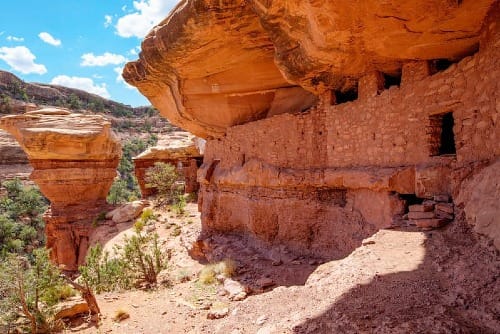
What is atypical—and what has inspired me—is the role of Indigenous people in the campaign. Tribes have countless reasons to distrust conservation policies. “The conservation project has consistently eroded Indigenous sovereignty,” I wrote in Making America’s Public Lands in 2022. “Still, despite all these ways public lands had failed tribal people, the Bears Ears Inter-Tribal Coalition turned to federal conservation for support. Bears Ears became the first Native-initiated national monument, a point of pride and, for many, a hopeful signal of change.” But what signals hope to some is a call to arms for others.
Instead of moving forward in an innovative and collaborative way, Utah’s political leadership has clung to tired tropes, unoriginal thinking, and a cramped vision of who belongs to the land and what its purpose is.
Bears Ears is not in any sense my landscape. I don’t know the feel of its soil, the sound of its wind, the taste of its water. Because of that, I can’t long to escape to it. But I do hope for it—and what it has represented. The hope that collaboration can occur. That historical debts can be rebalanced, even if only slightly. That some places might be spared from the worst of us.
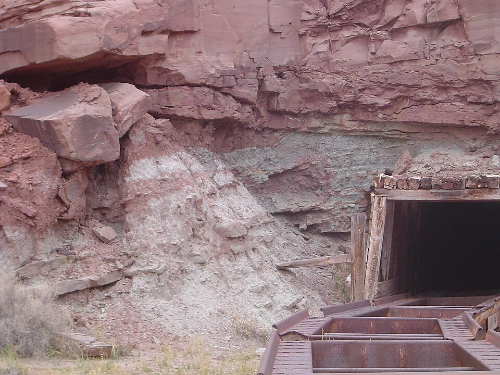
That hope, I must admit, is sometimes hard for me to muster these days when much that I value is eroded by the mendacious. Then I remember the words of writer and activist Rebecca Solnit:
Cause-and-effect assumes history marches forward, but history is not an army. It is a crab scuttling sideways, a drip of soft water wearing away stone, an earthquake breaking centuries of tension.
Cross-Words
Complementary pieces to this week's essay include:
 Adam M. Sowards
 Adam M. Sowards
Bonus news story from 2024 where I'm interviewed discussing Bears Ears:
 David Condos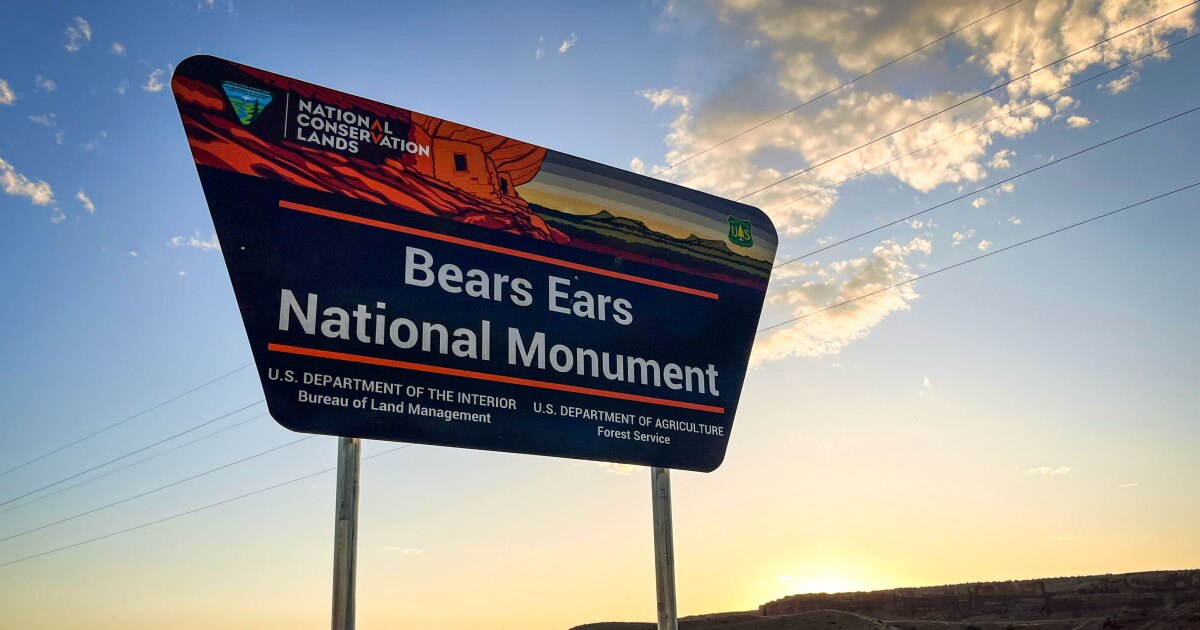
This week, besides the linked sources above, I did not rely on additional research.

Comments ()