The Lake with Two Names
Forgetting and remembering in Yosemite National Park
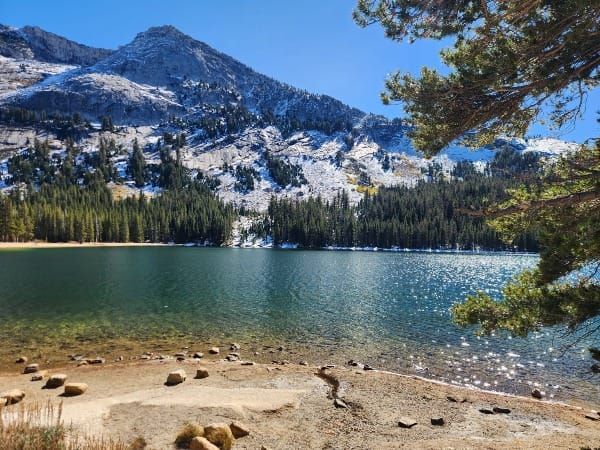
By lunchtime and after a couple hundred miles, too many of them along twisty mountain roads, I had arrived at the lake, its clarity mirroring a flawlessly blue sky. On the far shore, trees crowded the water. Above them, shaded by a southern ridge, a dusting of snow stuck to the pale granitic slopes. Fewer trees were on my side of the lake, finding few scraggly footholds across the rock that rose and rose.
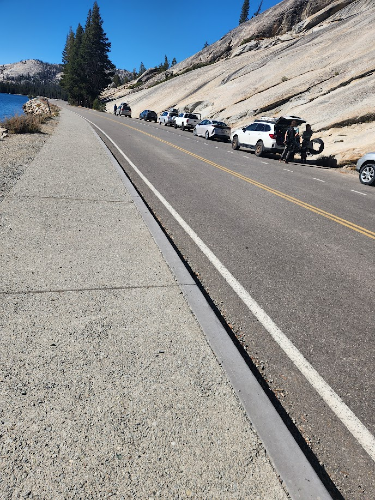
Cars stacked bumper to bumper on the shoulder, young people gearing up with packs and ropes to join their compatriots already scrabbling above. I was walking my dog, thankful for a stretch and a sidewalk that signaled this was one of the rare spots inside Yosemite National Park where dog walking was permitted.
While he tugged at the lead, I marveled at the rock climbers and the setting, while trying to remember the details of the conservation fight about Tioga Road that I was now walking beside. Some partisans in the Sierra Club had opposed an improvement project right here, along Tenaya Lake, helping to pivot the club toward greater confrontation with the National Park Service. The details, last October, were murky but sound enough in their broad strokes when I double-checked later.
I had forgotten entirely the other significant story rooted here.
After the discovery of gold in 1848, hundreds of thousands of miners gushed into the California hills and mountains, disordering and overwhelming the local people and ecology. California was combustible.
On his way out of office in 1851, California governor Peter Hardeman Burnett delivered an annual message to the legislature. Of the nearly 5,000 words in this address, twenty-two fall through history in notoriety:
That a war of extermination will continue to be waged between the races until the Indian race becomes extinct must be expected.
Burnett resigned two days later, though not because this view was out of step with contemporary Californians.
His successor, John McDougal, extended Burnett’s militia policy, which promised to fund voluntary militias, like the Mariposa Battalion which formed and operated that spring. Militias paid better than most mining jobs. They also eliminated competition and exacted retribution for offenses real or imagined. They attracted all sorts of men.
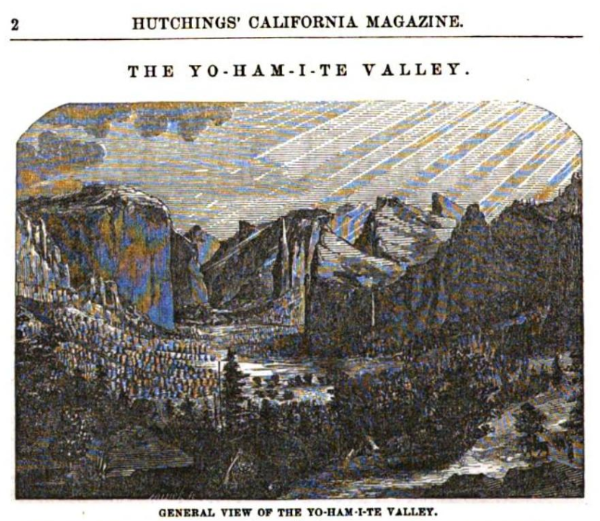
A trading post operated by James Savage (his real name!) had been raided. Savage led the Mariposa Battalion into the mountains where members attacked the Ahwahnechee in Yosemite Valley. The militia were the first white visitors there. By the time the campaign ended, the militia had killed somewhere between 24 and 30 Native people (and at least 73 during the militia's full existence, which was just a few months).
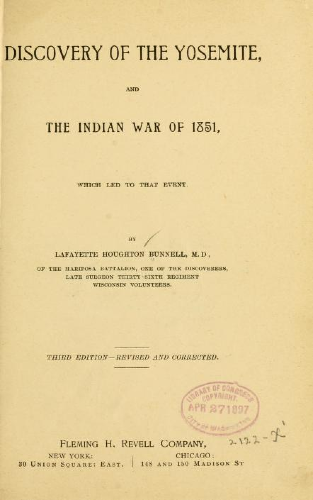
One member of the militia, a doctor named Lafayette Bunnell, wrote an account. The book, Discovery of the Yosemite, and the Indian War of 1851, which Led to that Event (1892), is not enjoyable reading. Its prose is meandering, his morality disappointing. Yet the scene Bunnell recounts from Tenaya Lake is poignant and worth a pause.
Over several months, the militia kept pursuing the Ahwahnechees. The battalion destroyed food stores to undermine Native survival. They moved through the mountains and then surprised the Ahwahnechees camped by the lake. The Ahwahnechees surrendered there and then were led to a reservation on the Fresno River, enforced by a treaty that the Senate never ratified.
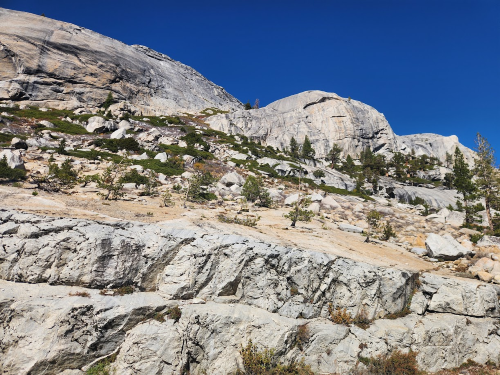
Bunnell found the lake setting “one of the most charming views in this sublimest scenery of nature.” Momentarily, he even forgot the beauties of Yosemite Valley. He suggested that they name the lake after an elder Ahwahnechee named Tenaya, who later explained it already had a name: Py-we-ack. Bunnell's incomprehension compounded:
Upon my telling him that we had named it Ten-ie-ya, because it was upon the shores of the lake that we had found his people, who would never return to it to live, his countenance fell and he at once left our group and joined his own family circle. His countenance as he left us indicated that he thought the name of the lake no equivalent for the loss of his territory.
This scene haunted the writer Rebecca Solnit, who shared in Savage Dreams that Bunnell “shocked” her in how he could be “lyrical and coldblooded at the same time.” “Usually annihilating a culture and romanticizing it are done separately,” she wrote, “but Bunnell neatly compresses two stages of historical change into one conversation.”
Immediately after the name-sharing scene, Bunnell explained that he never disliked Tenaya. “He had always been an object of study,” he wrote, “and I sometimes found in him profitable entertainment. As he moved off to hide his sorrow, I pitied him.”
I pity Bunnell.
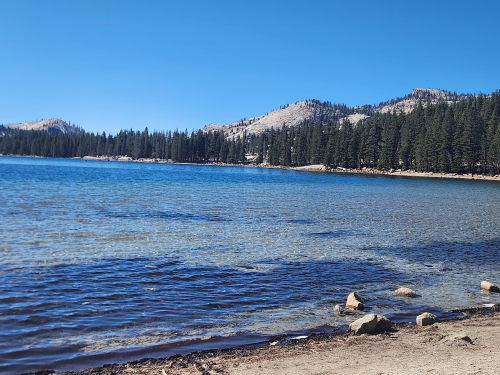
A blue sign framed in wood stands near the lake now, by the toilets and parking lot, faintly gesturing at all of this. “A Way of Life Continues,” it reads. It’s a message from the Traditionally Associated Tribes of Yosemite National Park. It encourages visitors to “remember who walked here before you and imagine who will walk here after you. We ask that you respect this place so that our people can continue to enjoy these lands like our ancestors have.”
It’s a sentiment that would never have occurred to Bunnell.
Cross-words
Earlier writing of mine that is complementary to this week's include:
 Adam M. Sowards
 Adam M. Sowards
This week I mainly consulted: Benjamin Madley, An American Genocide: The United States and the California Indian Catastrophe, 1846-1873 (2016); and Rebecca Solnit, Savage Dreams: A Journey into the Hidden Wars of the American West (1994; 2014).
In Other Words
A new story is out about local matters.
 Bryony Angell
Comments ()